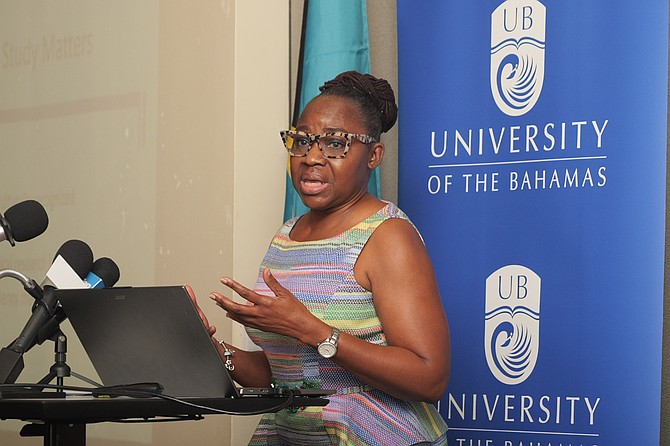
DR SHAMEL ROLLE-SANDS giving brief remarks on launch of the new edition of UB studies held at Harry C Moore Library on February 17, 2026. Photo: Nikia Charlton
By LEANDRA ROLLE
Tribune Chief Reporter
lrolle@tribunemedia.net
EMOTIONAL dependence on extramarital partners, or “sweethearts,” was high for both unfaithful husbands and wives, a new study has found, concluding that such dependency may be a key factor influencing infidelity and could carry potential mental health consequences.
The research, conducted by Shamel Yvonne Rolle-Sands and colleagues, offered fresh insights into marital infidelity and emotional reliance among Bahamian couples.
It is one of several studies released by the University of The Bahamas yesterday examining “sweethearting” – which has been described as a national pastime in The Bahamas – and its broader social and emotional impacts.
The study found that emotional dependence on an extramarital partner — regardless of whether that partner was labelled a “sweetheart” or something else — was significantly higher among unfaithful spouses than among faithful ones.
More than half of respondents reported high or severe emotional dependency.
Wives who were unfaithful showed a sharper increase in emotional dependency when compared with husbands.
Dr Rolle-Sands explained yesterday that researchers measured emotional dependence using a scale ranging from 0 to 88.
Scores below 10 suggested low dependence, 11–22 moderate, 23–33 high, and above 37 severe emotional dependence.
“So, when we look at it, 51 per cent, more than half of these married people who responded, their scores indicated that they have either high or severe emotional dependency,” she said.
There was also a notable difference in how men and women defined their primary partner when multiple relationships existed.
Wives (21.6 percent) were more likely than husbands (8.8 percent) to consider their sweetheart their primary partner.
Dr Rolle-Sands called this data interesting, concluding that “ higher dependency was linked to all of these things.”
Researchers also found emotional dependence increased alongside the frequency of sexual encounters outside the marriage.
“Whether we believe it or not, most of us think of sex as transactional, but that is actually that can be a very emotional. It's more than just physical in many cases,” said Dr Rolle-Sands.
She concluded that high emotional dependency can heighten personal risk, making individuals more susceptible to “ certain domestic violence risks.”
“The scores indicate to us that, and it's not just men or women, and it's not just victims or the perpetrators, but both victims and perpetrators, once their emotional dependency scores are high, as they increase, that also increase their risk of becoming either a perpetrator of a domestic violence or becoming the recipient of domestic violence.”




Comments
Empiricist 1 month, 3 weeks ago
What is meant by emotional dependence? This article fails to describe the key dependent variable in this research. Until we get a proper description of this variable, these “ supposed research findings “ are useless.
joeblow 1 month, 3 weeks ago
... most Bahamians are chronological adults, but emotional children who do not understand the twin concepts of self control and actions having consequences! A brief look around our society bears that out. The sad part is that, as a people, we were not always that way and we seem to think the low road is better!!
birdiestrachan 1 month, 3 weeks ago
Surely they can find something better to do than this absolute nonsense
birdiestrachan 1 month, 3 weeks ago
Yet they worry about gay people when they have so much more issues to address in their straight world.
Sign in to comment
OpenID