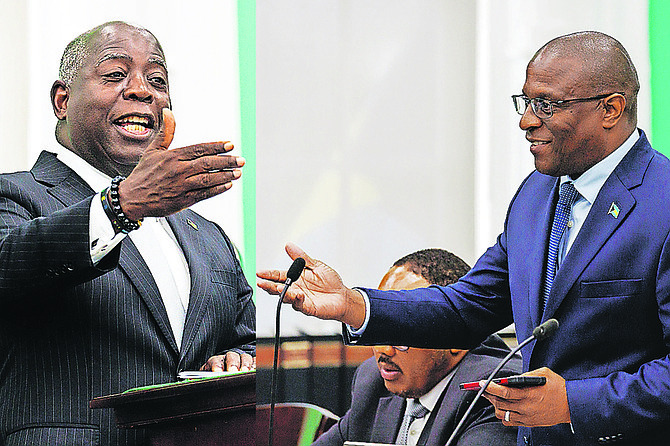
The PLP and the FNM are struggling to get many voters to believe that voting for them will make a difference. There will likely be a good number of protest votes by those determined to send the parties a message.
AS the general election approaches political parties might recall the proverb, “You can’t fatten a cow on market day!” What is not completed or done sufficiently in advance to secure an electoral victory cannot be salvaged at the last minute. This is a reality for both major parties with the election reportedly worryingly tight.
There appears to be a high number of unconvinced and persuadable voters. Despite the power of government and the Public Treasury, the PLP is failing to convince a good number of non-base voters. Moreover, some base voters feel left behind, though most PLPs will likely support their party.
A news story yesterday reporting on the complaints of residents of Grand Cay is a warning sign for the government. This journal reported: “Residents of Grand Cay, Abaco, say they feel abandoned by the government amid ongoing power and water outages that have made life unbearable and driven tourists away.
“Several residents, speaking to The Tribune yesterday, expressed frustration over what they described as a daily crisis — the lack of reliable electricity, running water, and phone service. They said the persistent issues are affecting the well-being of locals and tourists alike.”
Despite four years in office there are many communities and constituencies complaining about failed promises by the PLP, which the government has little time to fix, especially given the difficult state of public finances.
But even if more of these outstanding issues are addressed, many voters who feel neglected may have already made up their minds. There is often a point of no-return for a good number of voters.
By example, Bahamians know well the gimmick of paving roads soon before an election, which has little currency with jaded voters who have seen that game before.
The power of incumbency is a mixed blessing. While a party can do many things for constituents, the failure to do certain things riles and disappoints voters. An MP who has done little for constituents or who failed to fulfill previous promises, is vulnerable to an opposition candidate, including a fresh face.
The political aphorism, “Don’t compare me to the Almighty, compare me to my opponent,” is a mixed blessing for Philip Davis and Michael Pintard. Both sides still have much work to do to boost and articulate the strengths of each of their leaders while attacking the weaknesses and mistakes of the other leader.
If the PLP is banking more on the deficits of the Free National Movement than on its ability to move undecided voters with the largesse of the state and the appeal of Davis, this is a mixed bag, suggesting the party’s strengths and limitations.
Many voters are deeply dissatisfied with the incumbent government as is usually the case at this point in the electoral cycle. There is the typical let’s throw them out mindset. The cost of living and crime remain key issues. The government is becoming more vulnerable on immigration.
Many voters remain disgusted with the perception of corruption in the PLP, a perennial problem for the party which it has not been able to shake for decades.
After giving Perry Christie a second electoral chance, voters felt that he squandered the opportunity in numerous ways including the swirl of corruption in his government and his failure to deliver numerous promises.
Are voters ready to give Prime Minister Davis a second chance by reelecting him to a consecutive term?
Given the record of voting governments out every five years and a feeling that the country is on the proverbial wrong track, the FNM has the opportunity to build momentum in its favour. It remains an unrealised opportunity at this juncture.
What should be deeply worrying for the FNM is why it is not further ahead given the dissatisfaction in the country. There are a number of factors. Mr Davis is not only likeable, but most voters also have a perception of him. They know much of his biography.
Opposition leader Michael Pintard is still not well known. Few Bahamians know his biography or life story. Much work remains for him to connect with voters on a more visceral or emotional level. The continued perception of division within the party continues to cloud the party’s message and standing.
While the FNM rightly criticises the PLP’s failures, it must indicate how it will respond to these failures. A number of older voters believe that the FNM has a better track record in delivering public services and infrastructure. The FNM should remind the country of its record as it pivots to outlining its vision.
Nevertheless, many if not most voters have lost faith in the political class to deliver better public services, to boost economic growth, to respond to the social decay in the country, to clean up a dirty and derelict New Providence, to improve Family Island communities, and to bring genuine relief to Grand Bahama, among other pressing concerns.
The deep and widespread disconnect from politics is a global reality that is driving many citizens and voters to populist appeals.
In the United Kingdom, the Nigel Farage-led populist Reform Party has gained considerable momentum and did extraordinarily well in the most recent local elections. The Party is now polling ahead of the incumbent Labour Party and the Conservatives, the official opposition, which is in freefall and at an historic low.
While the Coalition of Independents and Lincoln Bain will likely not do as well as Reform and Farage, how many voters might they attract? Correspondingly, voters aged 18-30 do not have the historic ties to the major parties as did their parents.
The PLP and the FNM are struggling to get many voters to believe that voting for them will make a difference. There will likely be a good number of protest votes by those determined to send the parties a message.
Historically, populism was often a positive term. In the US, Theodore Roosevelt pursued a populist agenda of reform that included enhanced social welfare and the breakup of many corporate monopolies.
Today, populism is a pejorative, highlighting autocratic demigods destroying democratic norms while enriching billionaires and corporate elites. Nevertheless, there is a need for old-style populism.
Citizens around the world, including in The Bahamas, are experiencing longstanding economic challenges, including wage stagnation and rising inequality; high levels of unchecked immigration; corruption and incompetence by public officials; and a loss of trust in government and business elites.
Voters feel left behind, ignored, taken advantage of. Parties of the left, right, and center are scrambling to respond to the despair and despondency of citizens. There are some clues in this for the FNM and the PLP.
Bahamians are desperate for political leadership that will respond authentically to their economic, social, political, and cultural challenges. People do not expect perfect leaders.
But they are sickened by leaders who they believe continue to offer crap, a euphemism, rather than genuine hope. The last time The Bahamas had a progressive populist whom the country thought had an authentic and effective platform and specific policies for reform was Hubert Ingraham.
We are not likely to see that quality of leadership soon. Still, a leader who can come somewhere close to that era may realise good fortunes for himself or herself and better fortunes for The Bahamas.
Meanwhile, the major parties have considerable work to do to ensure that they have fattened and primed their messages, machinery, and the personas of their leader and candidates ahead of election cum market day.




Comments
Use the comment form below to begin a discussion about this content.
Sign in to comment
OpenID