Photos: Chappell Whyms Jr
By EARYEL BOWLEG
Tribune Staff Reporter
ebowleg@tribunemedia.net
ABOUT 200 residents in the Montgomery shanty town were served eviction notices yesterday, giving them 28 days to vacate their properties.
Superintendent Stephen Carey, chairman of the Unregulated Community Action Task Force, said demolition is expected to begin on September 16, pending any required engineering work. He said about 60 structures have been processed so far, though a final count was not available.
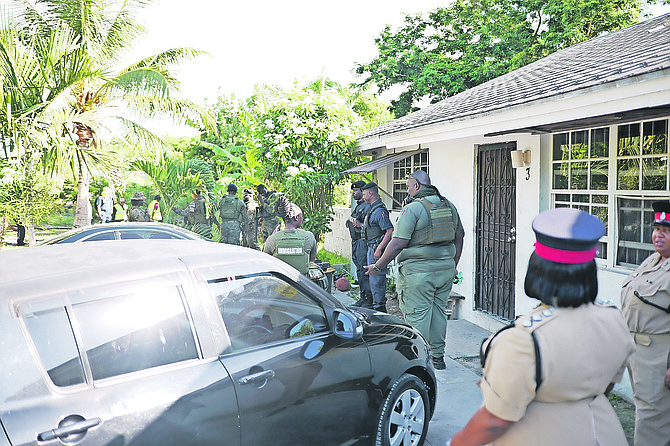
His comments came as residents stood watching government crews post eviction notices on homes and derelict vehicles in the unregulated community - part of an ongoing nationwide crackdown on illegal settlements.
Daphnee Augustin, a mother-of-six who has lived in the community for 28 years, said officials should have waited until after the start of the school year, as many children have nowhere to go. She had hoped to live in her car after eviction but was told the vehicles must also be removed.
“I’m used to this happening. Immigration and the police come in the back here often,” she said through an interpreter.
“So this is not new to me, but I was having some pain this morning. I heard noise, the commotion outside, so that would cause me to get up early this morning and to find them out here this morning.”
Now, she is unsure where she and her children will live, though she remains hopeful.
“God will support me in some way somehow,” she said. “I been here so long and I knows that God will help her to find a place. I’ve seen what they’ve done already in the other communities and the other villages. I was happy that we didn’t come here for so long and they gave me time, but I just wasn’t expected to be still so be so soon.”
Residents say affordable housing is scarce, with many rentals having restrictions on occupants, children, or pets. They added that rental prices are now so high that finding a suitable place to live has become increasingly difficult.
“Sammy”, another resident facing eviction, questioned whether the government could provide low-cost housing or apartments for people who cannot afford to buy a home, so individuals like him could rent or access affordable accommodation.
Supt Carey said those eligible for Social Services assistance will be helped, while others will be referred to alternative support.
“If you can invest this type of money inside this type of community, then you can invest the money where it’s supposed to be legal and regulated,” he said. “These structures are not regulated. It’s illegal. So therefore, you’re only wasting money. You’re throwing your money away by doing what you’re doing here.”
Teams from Social Services will conduct a walkabout today to interview affected residents.
Supt Carey said the land is designated for farming.
One home in the community has been owned by the Flowers family for nearly 40 to 50 years.
A representative for the Bahamian family said his mother gave the property to a friend to live in, but claimed the area has become filthy and others have added illegal structures to the property.
He said: “Everybody coming, dump garbage but this structure here, this belongs to us, and the property there belongs to us, where they dumping all these garbage this year, my mother gave the gentleman who live in this house here, okay to live in that but they just keep adding on, adding on, adding on, adding on. So I don’t know what’s what’s going on the back there, but now they say, now we got to break this down.”
He acknowledged the property lacked running water and electricity and did not meet building codes, but argued the 28 notice was too short a deadline.
“That’s not enough time,” he said. “How could you do that in 28 days? They say break it down. Why?”
The demolition of shanty towns has been a contentious issue. Successive governments have cited health concerns, illegal land use, and building code violations to justify the removals, yet critics argue the approach lacks compassion and fails to address housing shortages.
Since ramping up efforts in November 2023, the Davis administration has reported the demolition of nearly 500 unregulated structures across several islands.




Commenting has been disabled for this item.