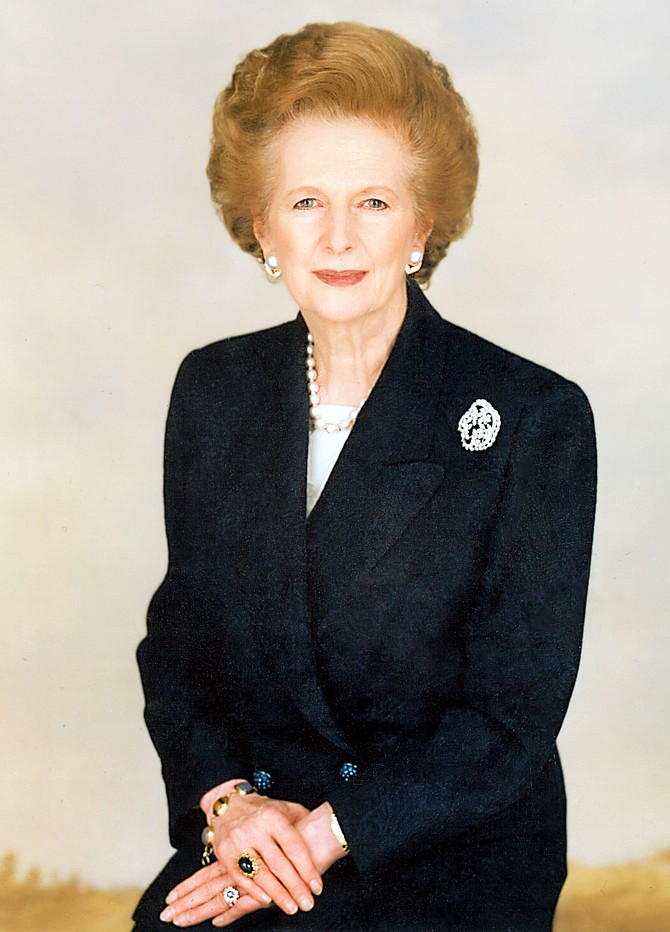
Margaret Thatcher
By Simon
A political leader, especially the leader of a political party, wears many hats. Among his or her critical roles is that of a magician in the best sense, one who has a certain charisma, who is able to conjure magic to garner a following, earn support, and win elections.
Compelling storytelling is a form of magic. Words, images, and emotions are magic beads. When mixed into an elixir or potion they can help reap enormous rewards for someone seeking to become a prime minister or president.
Many people rightly dislike Donald Trump for myriad reasons, ranging from his prolific lying to his Gulf of Mexico-sized ignorance and incompetence.
Yet, he has a feral genius for understanding much of American culture and the conceits, self-interests, desires, and aspirations of many of its people. He grasps “base” instincts in both senses of the word.
Donald Trump has been described as a huckster and salesman. He is also a magician, a conjurer, who has, to use the proverbial term of war, “weaponised” master racist tropes, self-aggrandising narratives, ancient prejudices, and simple stories and explanations – true and more often false – to earn enormous wealth and power, including the American presidency – twice.
Though someone else was the ghostwriter of Art of the Deal, Trump has often proved “brilliant” in the art of storytelling. He has honed simple and clear narratives, which he repeats with humour, outrage, colour, and expletives, ad nauseum.
The most successful political leaders tend to be those who deploy three levels of storytelling that combined partly resemble a Venn Diagram of overlapping stories.
The first story is that of the leader. It includes his or her origin story and biography, and how these have helped to shape a leader’s values and vision for one’s party and nation. Voters want to know some of the granular details of a leader’s life. In Bahamianese: “Who your people is?”
The second story is that of the political party one leads including the party’s origin, history, notable figures, values and principles, and contemporary vision.
The third story is that of the nation one leads or wishes to lead. It also includes a country’s origin story and mythologies, key chapters in history, failures and triumphs, national heroes, and a vision for where a country should be headed based on the aforementioned. The national story is retold and recast within the context of world history and global currents.
The great leaders cum storytellers weave these three stories into a powerful, clear and exhilarating narrative that is contagious, appealing to citizens and voters, who see themselves in the stories being told with vigour and imagination.
In becoming the first female prime minister of Great Britain, Margaret Thatcher repeatedly told of her origin as a grocer’s daughter, including the British and human values she learned from her parents.
The Standard recalled in a profile of Thatcher: “She followed her elder sister Muriel to Kesteven and Grantham Girls’ School. Although not brilliant academically, she worked hard and was always near the top of the class.
“In 1943, she won a place at Somerville College, Oxford, to read chemistry. She joined the university Conservative Association, eventually rising to president.
“Graduating with a second-class degree, she found a job at British Xylonite Plastics near Colchester. At the age of 23, she was selected as Tory candidate for Dartford.
“At her adoption meeting she met a tall, quite wealthy man who drove a Jaguar and lived in a flat in Chelsea. He ran a family paint and wallpaper company, and was rather taken with Margaret Roberts: his name was Denis Thatcher.”
This is the quality of storytelling voters want to know in order to identify their life stories with that of their leaders.
Thatcher went on to press her Conservative Party to recapture its fighting spirit and values to help resurrect a faltering country in malaise, in the economic doldrums, and in need of a new direction and new economic policies.
She imbued the party with enormous energy and momentum in the 1979 election, which was not a foregone conclusion for the Tories to win.
As The Standard also reported: “Labour Prime Minister Jim Callaghan was more popular than Mrs Thatcher…but the Tories’ policies were preferred by the electorate.”
Most people have heard Donald Trump’s stories of how brilliant and successful a businessman he has been, despite numerous facts revealing his massive failures in business. So successful has he been as a salesman that many have sought to lease his name and brand for their business ventures.
Throughout much of American history, successful Republican and Democratic presidents, including Franklin D Roosevelt and Ronald Reagan, coopted populist leaders, energies, and policies into their parties.
Donald Trump and his collaborators have done something even more powerful. They have not been coopted by the Republican Party.
Instead, as populist outsiders, they have taken over for now the party of Eisenhower, Nixon, Reagan, and Bush, diminishing the old Republican Party which became intimidated and subservient to the barbarians at the gate.
Others such as Newt Gingrich and the Tea Party had been storming the gates for years. Though they helped lay the foundation for Trump, it was Trump who told a more compelling story about the party’s failures in his successful takeover bid and creation of a cult of personality.
He labelled the party as out of touch. In a feat of brilliant conjuring and political jujitsu, he described the conservative party leaders as “Republicans in name only” or RINOs, coopting and weaponising “a pejorative used to describe politicians of the Republican Party deemed insufficiently loyal to the party.”
Trump branded long-standing Republicans as disloyal to the party to whom he was never himself truly loyal.
A conservative philosophy of balanced budgets (often ignored), standing up to Russia, support for alliances such as NATO, free trade (also sometimes ignored), and other core Republican values and policies, were upended for a radical reset by Trump.
Trump also deployed a narrative for those struggling economically, including those who feel rightly feel left behind by globalisation and America’s economic elites and the super wealthy, who Trump adores and craves their approval.
He resurrected populist themes of “us versus them”, migrants taking over America, racist tropes, and other supposed reasons for the plight of many Americans.
For much of his life, Trump has been a member of America’s wealthy elite and literally a country club Republican and owner. He has been a prime beneficiary of globalisation, free trade, capital from foreign interests, and promiscuous tax policies for the superrich.
Yet, continues to boost a narrative for his ardent supporters of how America has been taken advantage of by other countries and Democratic Party elites.
That he is able to make the imperial American superpower seem like a victim is another example of his ability to spin a narrative of magical thinking which belies facts and observable data.
Herein lies a certain genius and understanding of how voters are moved and energized. Human brains are wired for storytelling and simple explanations with little nuance or complexity. We are mostly converted by stories, images, metaphors, symbols, and simple analogies. Jesus preached in parables not factoids!
Most Bahamian voters by example do not understand technocratic terms like GDP, procurement, energy reform, national debt, etc. Leaders need to break down these terms into simpler language.
The aphorism, “You campaign in poetry. You govern in prose,” captures the imperative for politicians to speak and rhyme in poetry and short stories when courting voters, most of whom do not understand highfalutin talk.
A leader who fails as a storyteller cum magician, often fails to capture a country and to provide fire, energy and momentum on the ground that may catapult a party into office.




Comments
Use the comment form below to begin a discussion about this content.
Sign in to comment
OpenID