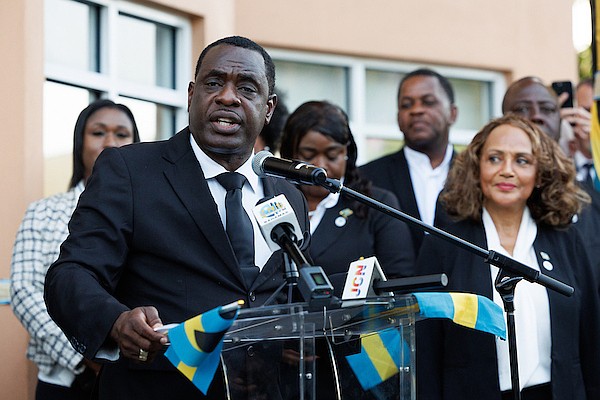
Coalition of Independents (COI) Party Leader Lincoln Bain speaks during the opening of COI Headquarters on June 28, 2025. Photo: Dante Carrer/Tribune Staff
By KEILE CAMPBELL
Tribune Staff Reporter
kcampbell@tribunemedia.net
THE Coalition of Independents is proposing to end naturalisation in The Bahamas within its first week in office, part of a 100-day immigration plan that would overhaul border control, enforcement and citizenship policy.
The plan states that a COI administration would amend the Bahamas Nationality Act in its first week to eliminate naturalisation, followed by a referendum within its first year to enshrine the change in the Constitution. However, citizenship is governed by the Constitution, meaning any attempt to eliminate naturalisation entirely would likely require constitutional amendment and a referendum first, rather than a simple legislative change.
The party, which faces an uphill election battle in a country with a dominant two-party system, did not explain what alternative routes to citizenship would replace naturalisation or how pending applications would be handled.
Under the proposal, immigration and national security would be merged under a single ministry led by COI leader Lincoln Bain, bringing multiple enforcement agencies under one command so that “planning, interdiction, processing, and enforcement operate on one national timetable”.
The plan also outlines a 30-day amnesty period. During that time, people would undergo biometric screening, employment and housing verification, and security checks. Those deemed compliant could receive temporary lawful status, while others would be registered for repatriation.
A digital Legal Immigrant Portal would allow employers and landlords to verify immigration status before offering jobs or housing. Non-compliance could result in fines, licence action or court proceedings.
The COI also proposes suspending the issuance of new work permits for Haitian nationals from day one, with existing permits subject to review as part of a wider system audit. A blanket suspension of work permits based on nationality could also raise constitutional questions, as immigration policies must be applied in a manner consistent with protections against arbitrary or discriminatory treatment.
Border enforcement features heavily in the document. The party proposes a “sea wall” using marine assets, drones, radar support and rapid-response teams deployed east and west of Inagua to intercept vessels suspected of carrying migrants.
A commission of inquiry into the alleged abuse of passport, work permit and residency approvals is slated for the first month. The plan also calls for a targeted state of emergency on illegal immigration and border security from day one.
Other measures include closing selected shanty towns, creating regulated housing for lawful workers and requiring approved health insurance coverage for immigrants to ease pressure on the public healthcare system.
The proposal introduces a volunteer deputisation pilot, allowing vetted civilians to assist with observation and reporting in high-risk areas under official supervision. It also calls for “officer modernisation”, including improved pay and benefits, upgraded equipment, advanced training, shared intelligence systems and wellness support.
Between days 61 and 100, the party says it would introduce legislation targeting illegal hiring and housing, anti-smuggling measures, vessel confiscation, and frameworks for the portal, worker housing, health insurance and anti-fraud protections.
The COI says the plan is designed to restore control of the country’s borders, strengthen compliance and expand enforcement capacity. However, it does not set out how the measures would be funded or fully implemented within the proposed timeline, particularly large projects such as a new immigration headquarters and an enforcement base in Inagua.
The party says progress would be measured within the first 100 days through increased enforcement activity, a verified national immigration database and active repatriation efforts, with a national report to follow outlining results and the next phase of implementation.




Comments
Use the comment form below to begin a discussion about this content.
Sign in to comment
OpenID