By RASHAD ROLLE
Tribune News Editor
rrolle@tribunemedia.net
POLICE officers were ordered to “aggressively” stop and search suspected vehicles and occupants and search “all suspected pedestrians” during a 114-officer operation across New Providence last week, according to a restricted operational plan obtained by The Tribune.
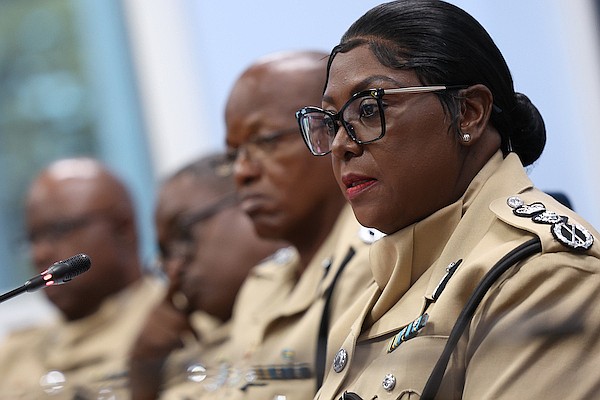
Commissioner Shanta Knowles condemned the leak of the document this week, saying it potentially undermined efforts to catch criminals. She suggested the leak was internal.
The internal Royal Bahamas Police Force document lays out the instructions for Operation “Clean Sweep”, a four-hour crackdown conducted on August 20 and 21 that included road checks, searches for firearms and drugs, warrant executions, traffic enforcement and checks of nightclubs and restaurants.
Among the force’s stated intentions was to “aggressively ‘Stop and Search’ suspected vehicles and occupants”. Officers were also told to conduct systematic road checks, apprehend people with illegal firearms and dangerous drugs and execute arrest warrants.
The instructions for mobile patrol teams included stopping and ticketing all traffic offenders, searching suspected vehicles and occupants for drugs and firearms and stopping and searching “all suspected pedestrians”.
The document does not define a “suspected pedestrian” or explain what officers were expected to regard as suspicious.
It does, however, place limits on the searches. Elsewhere, the plan says officers were to conduct lawful searches of people and vehicles “where reasonable suspicion exists” and required participants to act in strict accordance with the force’s standard operating procedures governing stops, searches and seizures.
The distinction is important because broad stop-and-search powers have repeatedly raised human rights concerns internationally, particularly over the potential for arbitrary searches and racial profiling.
The United Nations Committee on the Elimination of Racial Discrimination has called for stop-and-search powers to be exercised lawfully and without arbitrariness or discrimination, based on reasonable suspicion and subject to oversight. The committee has also warned against searches based solely on a person's appearance, colour, features or racial or ethnic background.
In a landmark 2010 case involving the United Kingdom, the European Court of Human Rights found that anti-terrorism powers allowing police to stop and search people without reasonable suspicion violated the right to respect for private life because the powers were too broadly drawn and lacked adequate safeguards against abuse. The court also identified the risk of arbitrary and discriminatory use when police are given broad discretion over whom to search.
The Clean Sweep order does not authorise searches without reasonable suspicion. On the contrary, it expressly refers to reasonable suspicion and lawful searches.
The operation also required police to keep records of their encounters.
Officers carrying out static duties and mobile patrols were instructed to document on a log sheet everyone stopped and searched, including the driver and all passengers of a vehicle. Divisions were required to submit information on arrests, stops and searches, name checks and search warrants executed, along with photographs, for an end-of-shift report.
The document does not say what the photographs were supposed to depict.
Clean Sweep was presented as part of Commissioner of Police Shanta Knowles’ 2026 priority of enhancing operational preparedness through what the document calls “intelligence-led policing and predictive criminal insight”.
Police said in the plan that crime data and predictive analysis would be used to identify hotspots and patterns and determine where resources should be deployed. The aim, according to the document, was to produce measurable results in reducing opportunities for crime.
Police also cast a wider enforcement net during the operation. Officers were instructed to visit nightclubs and restaurants to ensure they were not operating contrary to the Liquor Licences Act, while road checkpoints were to be used to check vehicle documentation.
Senior Assistant Commissioner of Police Zhivago Dames, who has responsibility for Information and Communications Technology, was put in command of the operation. Participating officers were instructed to wear depot or tactical dress with body armour.




Comments
Use the comment form below to begin a discussion about this content.
Sign in to comment
OpenID