By LEANDRA ROLLE
Tribune Chief Reporter
lrolle@tribunemedia.net
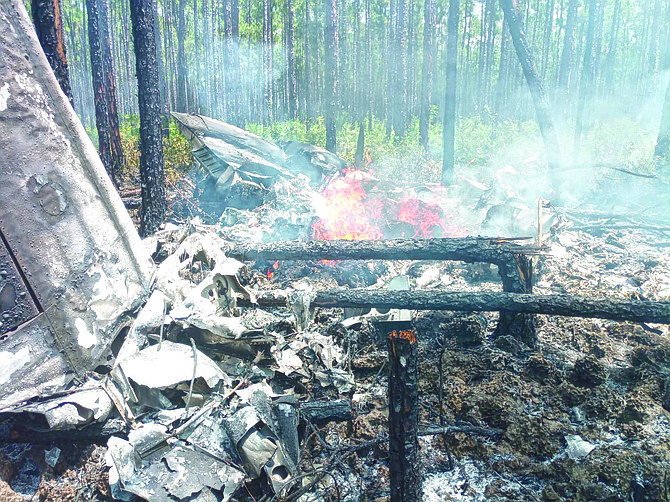
WRECKAGE from the Independence Day plane crash that killed ten people off Andros has been sent to the United States for detailed examination as investigators continue gathering evidence to determine what caused one of the country’s worst aviation disasters in recent history.
The Air Accident Investigation Authority said yesterday that recovered aircraft components, including both engines, will be examined at a secure facility in Jacksonville, Florida.
The parts will also be taken to the engine manufacturer’s facilities in Mobile, Alabama, for assessment.
The AAIA said the examinations are part of its continuing safety investigation and will help investigators establish the sequence of events and contributing factors surrounding the crash.
The authority said the investigation is intended solely to prevent future accidents by identifying safety deficiencies and recommending corrective measures.
“The investigation is not conducted for the purpose of apportioning blame or determining civil or criminal liability. The safety investigation conducted by the AAIA is separate and apart from any other investigation that may be undertaken by State Judicial, Legal, or Regulatory bodies,” the AAIA said.
The authority, assisted by Florida-based recovery partner SouthEast Air Recovery, recovered the wreckage from the crash site between July 22 and July 24.
The Flamingo Air Cessna 402C was travelling from New Providence to North Andros with ten people aboard when it crashed near San Andros Airport.
The aircraft first struck trees before travelling a short distance and coming to rest in a wooded area, where it was destroyed by fire.
One person survived the initial impact and escaped the aircraft but later died from their injuries.
The AAIA said its investigation remains in the first phase, which focuses on collecting information, documenting evidence and preserving all available material.
“Following completion of this phase, the investigation will progress to Phase 2 – Analysis of Data, during which all factual information—including wreckage examination results, recorded data, operational information, maintenance records, meteorological information, witness statements and other relevant evidence—will be comprehensively evaluated,” the AAIA said.
“The final phase of the investigation Phase 3 – Presentation of Findings will culminate in the preparation and publication of the Final Report, including any safety recommendations considered necessary to enhance aviation safety.”
The authority said it expects to publish a preliminary report on or before August 10.
A final report is expected approximately one year after the crash in accordance with international standards, although the AAIA warned that the timeline could change if further investigative work is required.




Comments
Use the comment form below to begin a discussion about this content.
Sign in to comment
OpenID