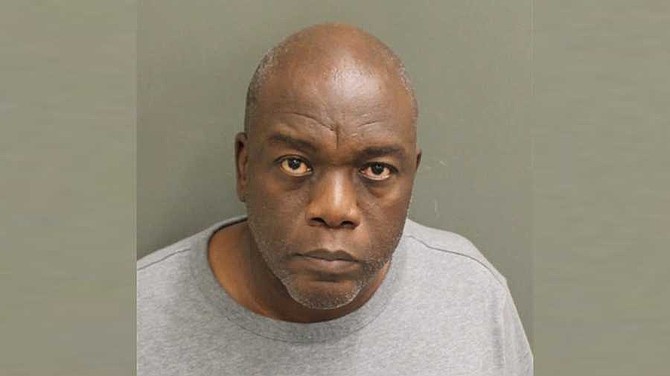
As Jonathan Gardiner sits in his New York jail cell contemplating his future, there appear to be a limited number of options open for the already convicted cocaine trafficker widely known as ‘Player.’
Gardiner, of course, is innocent of new drug trafficking charges until proven guilty. But with a sentence of 18 years for drug smuggling and money laundering already on his record, another conviction for similar offences could well lead to the 58-year-old spending much of the remainder of his life behind bars. If the government ultimately proceeds under what’s known as the ‘five-kilogramme cocaine threshold,’ the conspiracy to import charge outlined in the new complaint carries a minimum mandatory sentence of ten years in US federal prison and a maximum sentence of life imprisonment.
His previous conviction, although historic, could significantly increase the sentence. The more serious the prior offence, the more significant its impact can be. In Gardiner’s case, a judge would almost certainly take note that he had previously served a lengthy sentence for prior, serious, narcotics offences.
According to US authorities, Gardiner was carrying $30,000 in Bahamian currency and six mobile phones when he was rescued with 11 others from the May 12 election day plane crash off the Florida coast after both engines mysteriously failed on a short flight from Abaco to Grand Bahama. It is unclear when federal investigators became aware that the crash survivor was the same Jonathan Gardiner named in the US Drug Enforcement Agency (DEA) investigation, but it was only the following day that he was arrested shortly before he was due to fly back to The Bahamas with other survivors.
On May 15 he was charged and appeared before a court in Orlando, Florida. No plea was asked for or entered because it was an initial appearance not an arraignment.
Since then, he has been transferred to the Southern District of New York (SDNY), where federal prosecutors and handling the case. The SDNY has long been regarded as one of the most powerful federal districts in the US. It’s nicknamed the ‘Sovereign District’ because of its aggressive pursuit of complex financial crime, organised crime and international narcotics cases.
Gardiner is being represented by a Miami-based, Cuban American criminal defence attorney, Carlos Fleites, whose website claims he has secured ‘not guilty’ verdicts in cases including murder, date rape, battery and drug trafficking. As of going to press, Mr Fleites has not returned calls. No other court appearance has yet been scheduled.
It is known that Gardiner met Bahamian consular officials – at his request - in New York on May 26. No details of the meeting have been released due to ‘privacy concerns,’ the Ministry of Foreign Affairs said in a statement. It is believed that The Bahamas government, police and defence forces, are irritated, but not totally surprised, at having had no knowledge of the investigation, on Bahamian soil, into Gardiner and the Georgia Drug Trafficking Organisation (DTO) with which he allegedly conspired – especially as a politician, known only as ‘Politician-1,’ has been implicated. An affidavit stated that the politician ‘could provide security for the planned cocaine shipment’ and was introduced to an unnamed suspect, said to have been an undercover ‘confidential source’ (CS-3) as a ‘future associate.’
The Davis administration said on May 19 it was taking the matter ‘extremely seriously’ and would again ask the US government for information about the allegations linking the unnamed politician to an international drug trafficking probe. The statement from the Office of the Prime Minister (OPM) followed The Tribune’s exclusive report on details contained in a DEA affidavit tied to the arrest of Gardiner.
Court papers also made clear the DEA had kept the government and local law enforcement completely in the dark regarding a major three-year narcotics investigation, much of it with undercover confidential sources working in The Bahamas. That indicates that the DEA will have tightly restricted dissemination of intelligence to reduce the risk of leaks.
So, what now for Gardiner, who in 2014 was deported from the US, and told never to return, eight years into an 18-year federal prison sentence for drug trafficking and money laundering?
There are three realistic options open to him:
1 - Fight the case at trial.
Plead not guilty and challenge the government’s evidence before a jury. Trials in major conspiracy cases, however, are a risky business, and conviction rates in federal court are high. It is for that reason that most major federal narcotics cases end in guilty pleas rather than full trials. Prosecutors often use the threat of mandatory minimum sentence – ‘play ball or go down for 20 years,’ kind of threat - plus stacked conspiracy counts and additional money laundering charges to pressure defendants into co-operating or pleading guilty.
If Gardiner does plead not guilty, defence lawyers can use a number of tactics.
It is significant that the investigating authority in Gardiner’s case is the DEA. Some critics of the agency argue that it has historically relied heavily on criminal informants and aggressive undercover tactics. As one former FBI agent told The Tribune: “There’s a lot of great guys over there at the DEA, but it’s just one of those organisations where they run as fast and loose and hard as they can. They always have. They’ve got guys who’ve committed murder, guys who’ve worked for the New York Mob…you wouldn’t believe some of the guys they work with.”
If Gardiner’s case goes to trial, the reliability of such confidential sources is one area where defence lawyers may attack the prosecution’s case, with their honesty, motive, criminal history and credibility called into account. Prosecutors and agents always try to protect their sources, but there are occasions when their identity may become known to a defence lawyer.
In DEA Special Agent Michael Coleman’s affidavit supporting the charges against Gardiner, he admits to at least three CSs being used on the ground in The Bahamas in the undercover operation.
Like many CSs, or co-operating witnesses (CWs), as the FBI call them, they are often people who have been arrested on serious charges and have opted to co-operate, to put it in simple terms, to save their skins.
One of the DEA’s confidential sources in The Bahamas (CS-1) was arrested on narcotics charges and agreed to cooperate in the hope of avoiding prosecution. Court documents show the source had previous convictions involving narcotics, fraud, robbery, firearms and immigration offence. Agreeing to co-operate appeared to have worked and the new charges were dismissed. But in July 2025, the source was again arrested in Florida for conspiracy to commit robbery and possession of a firearms and ‘deactivated’ as a CS. But just a few months later the person was reactivated by a different DEA division. Defence lawyers would almost certainly challenge the credibility of such a witness if the case proceeds to trial.
Another CS used in the Gardiner investigation, CS-2, had no prior criminal history. They appear to have been in it, according to the DEA, purely ‘for financial compensation.’ The last CS named, CS-3, also had a prior history of narcotics trafficking. The DEA states that ‘Information from CS-2 and CS-3 has been deemed reliable and corroborated by other evidence,’ including the recorded communications included in the special agent’s affidavit.
The legality of searches or wiretaps is another area the defence would bring into question. According to the DEA special agent’s affidavit supporting charges against Gardiner, multiple wiretaps were used in building the case. Many involved members of a Georgia Drug Trafficking Organisation (DTO), which is alleged to have conspired with Gardiner to traffic cocaine into the US through The Bahamas.
But prosecutors are likely to argue that the case against Gardiner does not rest of confidential sources alone. According to the DEA affidavit, investigators will also rely heavily on court-authorised wiretaps, recorded conversations, travel records, financial information and surveillance.
2 – Enter plea negotiations.
Many defendants seek a plea agreement with the US Department of Justice (DOJ). In exchange for pleading guilty, prosecutors often reduce the number of charges, dismissing some counts, recommending a lighter sentence and agreeing not to pursue certain sentencing enhancements. This can significantly reduce sentencing exposure compared with losing at trial. Federal defendants often weigh what lawyers call the ‘trial penalty’ – the realisation that sentences after a trial conviction can be substantially higher than those imposed after a guilty plea and cooperation.
3 - Cooperate with authorities.
This is one of the most consequential options in federal narcotics cases. A defendant may become a DEA confidential source (CS), or what the FBI call a cooperating witness (CW), and provide information on suppliers or associates’ access to phones or encrypted accounts, recorded calls or meetings, testimony before a grand jury or at trial.
Federal prosecutors can then file motions for sentence reductions if the cooperation is deemed ‘substantial assistance.’ In the federal system, this can dramatically reduce prison time — sometimes from decades to only a few years.
The process often begins with what’s known as a ‘proffer session,’ or, colloquially, a ‘Queen for a Day’ agreement. A suspect, or defendant, agrees to meet with federal prosecutors and investigators and provide information about criminal activity. In return, the DOJ agrees to certain limits on how the person’s statements can be used against them, while using the information to pursue new leads.
Confidential sources are ‘bread and butter’ resources for agencies like the DEA and the FBI. Without them, the retired FBI officer explained, ‘there is often no case and no conviction.’ The FBI almost always use them to build their case, part of what the bureau calls the Enterprise Theory of Investigation. The concept is simple but effective: show that crimes aren’t just isolated incidents, but part of a broader criminal enterprise. It has been the Feds’ go-to strategy for dismantling major criminal organisations since the 1980s, when the bureau started shifting away from investigating individuals to targeting entire criminal organisations.
Once agents are convinced an enterprise exists, the next step is determining the scope of its illicit activities, trace the dirty money that funds it, and then use that framework to hold every member accountable. Instead of asking, ‘who committed this one offence?’ they ask, ‘How does the entire organisation function, profit, communicate, protect itself, and continue operating?’ The theory became especially important in organised crime, drug cartel, gang, public corruption, terrorism and racketeering investigations. The idea is to dismantle the whole criminal system, not merely arrest a few low-level participants.
Sources are expected to gather credible information and, whenever possible, record phone calls with suspects and be secretly wired for meetings with suspected criminals, and assist with the ongoing investigation, a direct source of information on the suspects’ criminal activities. Agents build timelines and ‘link charts’ showing relationships, communications and overt acts across months or years. This lets prosecutors present the jury with a picture of an entire “drug trafficking organisation” (DTO) or criminal network.
Their role is to collect evidence that will help secure a conviction. But being a CS can be an extremely risky business, particularly in major narcotic investigations. If their cover is blown, sources are viewed as traitors – or rats – and they can face threats, assault... or worse.
The DEA also uses a very similar organisation-focused approach in cartel and narcotics investigations, although people often more specifically associate the term ‘enterprise theory’ with FBI-style organised crime investigations.
For now, Gardiner remains in federal custody awaiting the next stage of a case that has raised uncomfortable questions about how a multi-year DEA investigation could unfold on Bahamian soil without the knowledge of local authorities. Whether he chooses to fight, negotiate or co-operate may ultimately determine not only his future, but how much more the public learns about the alleged conspiracy itself.
At this stage, it would seem, all options are on the table.




Comments
TalRussell 3 months, 2 weeks ago
Since Mr. Gardiner's arrest, we're slowly learning how. He co-negotiated bridging the divide between the two historically color-coded "yellahshirts'" and "redshirts'".
Just in case y'all may have missed it?
How does the plane's shutting off the flow of fuel...just so happenstance on 12 May 2026 to elect all 41 members of the House of Assembly?
Reportedly, a familiar "both sides isles" House to Mr. Gardiner.
Flyingfish 3 months, 2 weeks ago
Lol, seeing the government throw a tantrum about not being involved/informed in an investigation, with corrupt Bahamian Politicians, Police, & Defence Force officers is surely interesting.
They really are that shameless.
birdiestrachan 3 months, 2 weeks ago
What was he charged with.?? The flight was mysterious. 30 thousand Bahamian dollars and 6 cell phones is not criminal . They can trace a lot on those cell phones. But politician 1 or 2 or what ever the FNM RUNNING THEIR MOUTHES OVER SHOULD HAVE BEEN NAMED BY NOW.
birdiestrachan 3 months, 2 weeks ago
The Fnm party have their own newspaper and editorial page. And they akin to the hounds of hell are on a mission to destroy mr Halkitis One has to go with facts allegations will not do. Pay attention to those folks justice system. On display for all to see
licks2 1 month, 1 week ago
Mr. Halkitis is safe if the FNM is coming for him!! The FNM leadership can't even rip apart a wet paper bag. . .they are lost!! Yinna don't forget nah. . .Pintard is rumored to be "connected" to Gardiner and the Pilot that landed. . .oops, I mean "fall-dawn" in the water with Gardiner on board for the Americans to pick him up!!
Gardiner ger get "run-around" for a long time and never be charged for anything that will stick in court!!!
Sign in to comment
OpenID