By RASHAD ROLLE
Tribune News Editor
rrolle@tribunemedia.net
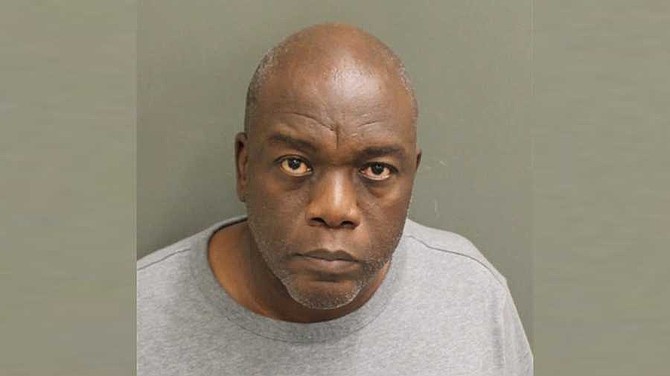
JONATHAN Eric Gardiner, the convicted Bahamian drug trafficker whose rescue from an Election Day plane crash has ignited a political firestorm in The Bahamas, has asked a New York federal judge to throw out the criminal complaint against him, arguing US authorities detained him for two days before filing charges and failed to indict him within the required 30-day window.
The motion is Gardiner’s first major legal counterattack since he was rescued from waters off Florida on May 12 and later charged in the Southern District of New York with cocaine importation conspiracy, a case that has drawn scrutiny to the Progressive Liberal Party.
In a motion filed on June 13, Gardiner’s attorney, Susy Ribero-Ayala, asked
court to dismiss the complaint with prejudice and order his immediate release, alleging that the government violated his constitutional and statutory rights by holding him before filing the criminal complaint and failing to secure a timely indictment.
The motion says Gardiner was a passenger on a domestic Bahamian flight from Abaco to Grand Bahama on May 12 when the aircraft crashed in waters off Florida.
The filing says the flight was expected to last about 15 to 20 minutes, the weather was clear, and Grand Bahama was visible to passengers before the crash. According to the motion, the pilot said all navigational instruments failed before the aircraft went down.
The defence argues that at the time of the aviation emergency, no arrest warrant had been issued for Gardiner in The Bahamas or the United States, and no criminal complaint had yet been filed.
The filing says the remaining passengers were allowed to return to The Bahamas on May 13 after spending the night in a hotel. It says only Gardiner and the pilot remained in the custody of US authorities, and that the pilot was later released and returned to The Bahamas with the other passengers.
The account differs in tone and timing from pilot Ian Nixon’s previous account to The Tribune.
Mr Nixon said all passengers were first checked at a local hospital, after which the passengers — except him and Gardiner — were fingerprinted and officially checked into the United States by Customs and Border Protection.
Mr Nixon said the only thing he was asked was whether he was carrying cash. He said he was not aware of survivors being searched.
He also described a less restrictive setting than the one outlined in Gardiner’s motion, saying those not detained in the medical centre for treatment, including him and Gardiner, were later taken to a large, open room with tables and airport-style chairs. He said Red Cross officials provided food and refreshments and that there was no sense anyone was being held against their will or was about to be arrested.
According to Mr Nixon, the group was told after a restless night that they would be flown back to New Providence around lunchtime. He said he and Gardiner were placed in a cell only about ten minutes before the flight was due to leave.
Gardiner’s motion argues that, unlike other passengers, he was not allowed to leave the hospital after being medically evaluated. It says an armed law enforcement officer guarded the area where he was being medically cleared.
Once discharged, the motion says, Gardiner was taken to Port Canaveral and placed in a holding cell before being transferred to the Orange County Jail in Orlando, Florida.
“From that point forward, Mr Gardiner remained continuously deprived of his liberty,” the motion says.
The defence says the US government did not file the criminal complaint until May 14, two days after Gardiner had already been detained. It says Gardiner made his initial appearance on May 15 in the United States District Court for the Middle District of Florida and remains incarcerated.
After that appearance, the motion says, he was taken to the Orange County Jail, transferred to the Seminole County Jail, and later moved to a detention facility in Oklahoma, where he remained when the motion was filed.
The defence argues that more than 30 days had passed since Gardiner was first deprived of his liberty and that, as of the motion’s filing, no indictment had been returned, Gardiner had not waived indictment, and the defence’s review of the public docket found no excludable time under the Speedy Trial Act.
“Accordingly, Mr Gardiner remains incarcerated solely on a Criminal Complaint that was filed two days after his detention had already begun and for which no timely indictment has been obtained,” the motion says.
The motion says the Fifth Amendment guarantees the right to a grand jury indictment for felonies and that the Speedy Trial Act requires an indictment within 30 days of a person’s arrest.
It also cites Rule 48(b) of the Federal Rules of Criminal Procedure, which allows a court to dismiss a criminal complaint if there is unnecessary delay in presenting a charge to a grand jury or filing an information against a defendant.
The defence argues that because no indictment has been filed, there is no formal charging document that satisfies federal procedural rules. It also claims the delay has prejudiced Gardiner’s ability to mount a defence, locate witnesses and preserve exculpatory evidence.
The motion comes as Gardiner’s case continues to dominate political debate in The Bahamas.
Gardiner, also known as “Player,” was among 11 Bahamians rescued by US authorities after a plane travelling from Marsh Harbour, Abaco, to Grand Bahama.
US court documents previously alleged he was a central figure in an international drug trafficking network under investigation by the Drug Enforcement Administration. The allegations have drawn intense attention because the DEA affidavit also referred to an unnamed Bahamian politician — identified only as “Politician-1” — who allegedly met an undercover DEA source and a drug pilot inside the Bahamian Parliament building in October 2024 to discuss a cocaine shipment allegedly worth $30m.
The court filing also alleged that when Gardiner was rescued, he had three mobile phones and $30,000 in Bahamian currency packed in a manner consistent with narcotics proceeds. The money was allegedly found in an envelope labelled with the handwritten name of a prominent Bahamian politician, which was redacted in the US filing.
The allegations have triggered weeks of political fallout.
The Office of the Prime Minister has said the government received no official information identifying any public official in relation to the matter and would seek further information from US authorities. It also said local law enforcement agencies would conduct inquiries.
Opposition Leader Michael Pintard has pressed for answers, repeatedly seeking to table documents related to the US complaint in the House of Assembly. House Speaker Patricia Deveaux blocked those efforts last week, describing the allegations as “frivolous” and “malicious” gossip and ruling that the matter should not be debated in Parliament.
The Free National Movement has since asked Commissioner of Police Shanta Knowles to launch an urgent and comprehensive investigation into the allegations in the US affidavit, including the identity of “Politician-1” and whether any elected official, public officer, law enforcement officer or security official facilitated criminal activity.
Mr Pintard has also asked police to examine concerns about money laundering, financial flows and government dealings involving Top Notch Builders Limited and affiliated entities linked to Gardiner.
US Ambassador to The Bahamas Herschel Walker declined to comment directly on the investigation when asked about the Speaker’s dismissal of the allegations last week, saying: “Wait and see.”
Gardiner’s motion asks the court to dismiss the complaint with prejudice, a ruling that would prevent prosecutors from refiling the same complaint, and to order Gardiner’s immediate release.




Commenting has been disabled for this item.