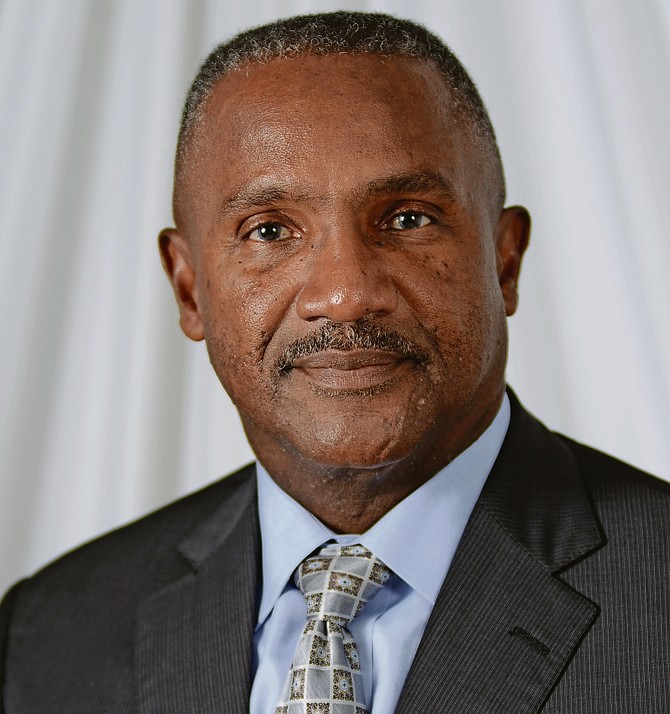
Craig Gomez
By NEIL HARTNELL
Tribune Business Editor
nhartnell@tribunemedia.net
THE Bahamas’ status as a “front runner” for tourism investment has been reaffirmed with non-bank financiers identifying this nation as the Caribbean destination they are “most bullish” on when it comes to funding resort and other related projects.
Craig A. 'Tony' Gomez, the Baker Tilly Gomez managing partner, told Tribune Business that findings from the accounting firm’s 2026 Caribbean Hospitality Financing Survey show The Bahamas remains “out front” with close to 25 percent, or one-quarter, of non-bank respondents naming this nation as the one that leads the region when it comes to the confidence they have in funding tourism-related developments.
So-called ‘non-bank’ financiers were described in the survey as the likes of private equity and investment funds, resort and real estate developers, and family offices. The Bahamas was also viewed relatively favourably by traditional bank lenders in comparison to other Caribbean territories, which ranked it equal fourth alongside Antigua & Barbuda with close to 10 percent naming it as the country they are most confident about.
Mr Gomez told this newspaper that the Baker Tilly survey results are “a huge boost” for The Bahamas, which survey respondents consistently named as being among their top three Caribbean destinations when it came to financing tourism projects. He explained that the findings show a solid platform for further job-creating investments in this nation’s largest industry and employer exists, laying the foundation for increased activity and much-needed economic growth.
However, the Baker Tilly Gomez chief said the results also highlighted challenges that the entire region - and not just The Bahamas - face in securing investment and bringing projects to fruition. He pointed, in particular, to frequently-expressed financier concerns over “constraints on doing business” including the long wait time, and associated uncertainty and cost, for government approvals; difficulties and delays in obtaining necessary work permits; and inadequate utilities and infrastructure.
Mr Gomez added that accountants, attorneys and others who have represented foreign direct investment (FDI) clients have become accustomed to “approaching every contact available” in a bid to secure the necessary permits, and said: “We do not expect a gradual pace; we expect a normal pace of approvals, and that has been the challenge.”
He also urged The Bahamas to constantly refresh its tourism product to remain ahead of Caribbean and other global competitors, and argued that this nation has to “take it up a notch” with the long-promised redevelopment of downtown Nassau and Bay Street into a destination that attracts locals, residents and tourists alike.
As for how the increasing adoption of artificial intelligence (AI) might impact tourism, Mr Gomez said “the jury’s still out” - based on the 2026 Caribbean Hospitality Financing Survey findings - on whether, and how much, the evolving technology may impact tourism jobs and employment medium and long-term, with present effects largely focused on flight schedules and helping visitors book both plane seats and accommodation in their chosen destination.
However, the results left little doubt that The Bahamas’ remains one of the Caribbean’s leading destinations for tourism financing and investment. The next-most popular locations for non-bank lenders to deploy their capital were named in the survey as Jamaica and Turks & Caicos, both cited by between 15-20 percent of respondents compared to The Bahamas’ near-25 percent.
Asked to identify why they found particular Caribbean territories attractive for funding tourism projects, financiers - both banks and non-banks - consistently cited The Bahamas as being among the top three. “DR (Dominican Republic), Jamaica, Bahamas – growing economies and growing demand,” one unnamed respondent said. Another added: “Cayman, Bahamas, Jamaica due to stability, airlift and proximity to key source markets.”
A third, giving a more detailed explanation, said: “Turks & Caicos - mature luxury market with strong global investor appeal supported by acceptable modern infrastructure. Bahamas - political and monetary stable economy. Mature tourism industry and great real estate development opportunities. Jamaica - Mature tourism economy and great opportunities emerging due to the massive investment in all island road infrastructure etc, which now opens up new real estate deals.“
Mr Gomez told Tribune Business he believes The Bahamas “is always well-poised” to attract tourism-related investments due to its political stability and continuity; proximity to its key Florida and US north-east coast markets; and perceptions that it remains a “neutral” or “safe space” during times of global conflict, such as the ongoing Middle East war involving Iran, when visitors want to remain close to home.
“That is a huge boost for The Bahamas,” the Baker Tilly Gomez chief said of this nation’s leadership position as the country non-bank lenders are most bullish on. Noting that just such a financier, Brookfield Asset Management, owns the Atlantis resort, he added: “Tourism is big business. When there is a good feel that The Bahamas is viewed as among the top three Caribbean destinations, it can only mean a good thing for The Bahamas and that we are doing what we do well.
“The more we can grow, and the more we attract and better we refresh our tourism product….. Once we invest in our own product, we make The Bahamas a more attractive place for tourists to come, and find something to do, because we have taken our tourism product up a notch.
“If we develop downtown, there are two types of people that will attract - the tourists and Bahamians alike, where locals engage and have their own place. The tourists will engage even more. That’s a boost to be ranked in the top three. It’s important we get this [downtown Nassau] up to speed and acceptable levels, and continue to enjoy and share our tourism product.”
Mr Gomez added that The Bahamas also needs to work on ensuring it is not perceived solely as New Providence, but is a destination of multiple islands and cays each with their own specific visitor attractions. Alongside resorts, boutique hotels, vacation rentals and bonefish lodges, he said the survey showed “smaller” five to ten room properties, with average visitor stays of three nights, had also proven popular with lenders.
“The Caribbean is a destination,” Mr Gomez said. “The Bahamas is out front in the tourism product because, when other nations in the region didn’t think about their tourism product, we were refreshing ours. Everyone is in the tourism space, but The Bahamas has always been out front. We have developed a world class airport and cruise port, and want to develop Family Island infrastructure. We consider ourselves to be a front-runner in the industry and the survey supports that.
“We are second to none in the Caribbean in terms of airlift. The airlines serve routes that are top feeders for us. The one thing we can brag about is that, if you miss a flight to Miami, there’s very likely another carrier going to Florida or Miami in the next hour. That’s always been an advantage for travellers coming to The Bahamas. That positions us as a desirable country, different country to any other places in the Caribbean.”
However, the Baker Tilly survey results showed ease of doing business concerns persist across The Bahamas and the Caribbean. Some 62 percent of non-bank lenders signalled “it is becoming more difficult to conduct business in the Caribbean” - an increase from 56 percent in 2024. “It is increasingly hard to secure new work permits and even more difficult to gain approval for permit changes for promotions,” one investor said.
Another added: “Governments keep making it very difficult at the tactical level, with time to delivery - and uncertainty of delivery - of work permits, Business Licences, etc”. Mr Gomez, affirming these findings, told Tribune Business: “What is challenging for us is investors are finding constraints on doing business with us.
“The challenge remains the same for non-banks and banks - getting government approvals, getting work permits and the necessary infrastructure and utilities in place. Many of the bank and non-bank investors are finding this the biggest challenge in the Caribbean, not just The Bahamas. Everyone is complaining about the process of getting approvals to jump-start projects in the tourism space.
“Non-banks report that it is more difficult to conduct business in the Caribbean, particularly in areas like timelines, bureaucracy and the general role of government in assisting inward investment,” Mr Gomez said. “That’s the challenge across the Caribbean, but we have heard these very same concerns in The Bahamas. The challenge going forward is to ensure, in terms of approvals and the approval process, the way forward is we have to be less delayed and bureaucracy is removed.
“What does that mean? We know we have to go through a process. We should not expect a one-day approval, but we should also not experience undue delays in the approval process. Many of us who have acted on behalf of clients over the years know you have to approach every available contact to get an approval package we can use.
“We do not expect the quickest pace. We expect a normal pace of approvals. That has been the challenge for many investors, banks and non-banks, in moving investments along in The Bahamas and this survey shows it’s not only The Bahamas; it’s the rest of the Caribbean as well.”




Comments
Use the comment form below to begin a discussion about this content.
Sign in to comment
OpenID