By DAVID LEIGH
Tribune Editor-in-Chief
daleigh@tribunemedia.net
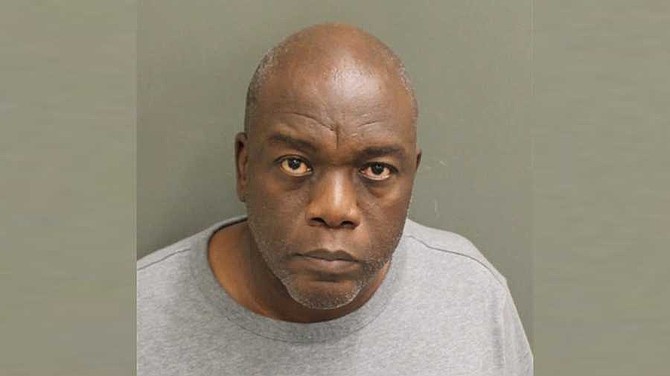
THE circumstances surrounding suspected drugs kingpin Jonathan Eric Gardiner’s arrest last Friday reads like something from the pages of a John Grisham thriller, with a bizarre stroke of luck for United States law enforcement authorities leading to his detention after a covert operation spanning at least three years.
Wiretaps, paid undercover sources working for the US Drugs Enforcement Agency (DEA), a drugs mule pilot dying when his plane crashed at Rum Cay, and an unnamed Bahamian drugs smuggler said to have $30 million in the bank, four private planes at his disposal, and an airline hangar piled high with cocaine, are all part of the plot.
It is not known whether the smuggler referred to is Gardiner. Also astonishing is an alleged meeting with a high-ranking Bahamian politician – the mysterious ‘Politician-1’ – who in October 2024 is said to have met with those he or she believed were involved in a massive upcoming shipment of 1,000-kilograms of cocaine, said to be worth in the region of $30million.
The meeting took place inside the very heart of Bahamian politics - the Bahamian Parliament Building.
The incredible story behind Gardiner’s capture is contained in a newly-released deposition filed by DEA Special Agent Michael Coleman, a member of the agency’s Special Operation’s Bilateral Division, who reveals the workings of operatives like ‘Player,’ Gardiner’s nickname, a drugs distributor named ‘Shorty,’ and a narcotics ‘stash house’ operator known as ‘Tall Dude.’
It sounds like something from the wild, out-of-control, days of the 1980s, when Colombian cartel boss Carlos Lehder turned Norman’s Cay into a heavily armed smuggling fortress during a decade which cast a dark shadow over Bahamian society and fuelled a climate where criminals often felt untouchable as cocaine money drifted through the islands like a toxic tide. But this story occurs in present day.
Special Agent Coleman, an expert in international narcotics and weapons trafficking, paints a picture of The Bahamas continuing to be very much at the heart of massive international drug smuggling operations from South America into the US, despite repeated government promises to clean-up the country’s act after the high-profile arrests of five men in 2024. And it’s centred on the bizarre turn of events which saw Gardiner arrested after he was one of 11 Bahamians rescued after their Election Day flight from Marsh Harbour, Abaco, to Grand Bahama, crash landed in the sea – critically in US air space, and he was picked up by US authorities - after both its engines failed mid-flight, in stormy conditions, and they were left to drift in life rafts for five hours on May 12.
When rescued by the US military, 80 miles off the coast of Florida, Gardiner was wearing a cross-body bag containing three mobile phones, a small quantity of cash, and $30,000 tightly-packed inside an envelope labelled with the handwritten name of a prominent Bahamian politician.
Who is ‘Politician-1’? is now the question on everyone’s lips. The name is redacted in a photograph accompanying Coleman’s deposition. US authorities know the name, but whether it has been passed to Bahamian law enforcement, or government, is not known.
After winching him to the safety of a rescue helicopter, US Coast Guards quickly discovered Gardiner was a wanted man and had been under surveillance by the DEA as a central character in an international drugs smuggling cartel - despite previously having been jailed in the US for 18 years for similar drug and money laundering offences. But the clock needs to be turned back to 2023, 12 years after being deported, to discover how Gardiner first reappeared on the radar of US law enforcement agencies.
The DEA was investigating ‘multiple’ drug trafficking organisations (DTOs) transporting ‘ton-quantity cocaine shipments by air and sea from Colombia, Venezuela, Haiti, and the Dominican Republic, through The Bahamas.’ Among DTOs being investigated in 2023 was one based in the US state of Georgia.
Gardiner, it is alleged, was a major supplier of drugs for the organisation from South America which had passed through The Bahamas. The DEA launched a major operation that, over time, involved using two ‘confidential sources’ (CS) to assist their investigation.
One agreed to become a source in return for charges against him being dropped - he had been arrested for possession of narcotics and approximately $84,000 in May 2023.
He had previously been convicted of multiple narcotics, fraud, robbery, firearms and immigration offences and was facing a lengthy prison sentence. In other words, he would escape unpunished if he helped the DEA bring in bigger fish.
The other source had a clean record and was in it, it appears, purely for the money.
It is alleged that many calls between Gardiner and different members of the Georgia DTO were wiretapped and intercepted by the DEA. From the interception of a mobile phone used by a drug distributor for the organisation, agents were able to access Gardiner’s Apple iCloud account, it is claimed.
From that, travel and toll records were obtained. Agents also detected that members of the Georgia DTO travelled to and from Nassau for meetings with Gardiner, who allegedly supplied narcotics to the gang. In calls, Gardiner identified himself as ‘Gardiner,’ ‘Jonathan,’ or ‘Jonathan from The Bahamas.’
One of the DEA’s confidential sources is alleged to have procured a large amount of narcotics – approximately 200 kilogrammes of cocaine, worth up to $8 million – from Gardiner.
The DEA agent’s affidavit, filed in the US District Court, Southern District of New York, on Friday claims two Georgia DTO members travelled to Nassau in December 2022 to meet Gardiner and coordinate a large upcoming shipment planned for February the following year (2023).
In January, it is alleged, one gang member texted a colleague saying: “Hit me when you can Bro. ‘Shorty’ says he’ll be in place by Saturday” (January 28.) Two days later, one of the gang texted Gardiner, the deposition claims, ‘Shorty here.’
Dozens of texts between three members of the DTO were intercepted by the DEA. One, on February 6, reads: “The Lender was inquiring about close out. Shorty wants to take the majority down south today to take care of the guys who brought us across. I am about half way down myself and I have some drinks for you as well...”
Three days later, one gang member texted another in the early hours of the morning saying: “Stay up, I’ll be pulling off in a second.” A few hours later, at 6.28pm, one gang member texted another: “Fumbling thru this mail. Does Bro have his sorter machine there?” The other man responded “Yes.” Approximately 14 minutes later, at 6.42am, the man texted Gardiner, it is alleged, “Hey doctor Got positive new bro – You’re going to love this situation.”
In his deposition, DEA agent Coleman says based on his training and experience, he believed ‘sorter machine’ was a reference to a money counting machine, commonly used by drug traffickers.
On February 19, on an intercepted call, ‘Shorty’ was asked if “Tuesday was still 100% for Florida” because another gang member wanted to book his ticket. ‘Shorty’ responded that he was almost ‘positive,’ but would make a phone call and report back. Four hours later, ‘Shorty’ said he would leave for Florida on or about February 21.
Another DEA intercepted call recorded ‘Shorty’ speaking in a ‘cryptic manner while discussing various numeric figures’ with a member of the DTO. The man stated he would be sure ‘they’ understood that ‘Shorty’ had ‘30 years of investment in the next few days.’
‘Shorty said he wanted to acquire ‘close to 70’ – believed to mean $70,000. The other gang member allegedly said that Gardiner had called the previous evening but he had missed the call.
On February 20, gang members discussed the collection of drug proceeds for the pending transaction. The DTO leader told ‘Shorty’ that a member - known as a ‘currency transporter’ - would arrive at the boss’s residence the following morning with ‘6-0’ – a reference, the DEA believes, to $60,000 in drug proceeds.
On February 22, plans, according to the deposition, came to a standstill because the supplier – Gardiner, it is alleged - ‘needed more time.’ The following morning, after the transaction occurred, the gang’s ‘currency transporter’ told the leader he was on his way back to Georgia from Florida. But he said the ‘package was small,’ and he had picked up ‘five to seven units.’
The gang leader said ‘the count’ was supposed to have been double that amount. Later that evening, the gang leader called the ‘currency transporter’ saying the package was ‘not too bad or shabby, and that the package was a niner.’”
The DEA believes that refers to the package containing approximately nine kilograms of cocaine.
The following day, the leader called one of his gang members saying ‘Tall Dude’ would be picking up two ‘dinner plates’ that ‘looked ‘pretty nice.’ The DEA believes that refers to two kilograms of cocaine.
Following that shipment, the DEA allege, the Georgia DTO ‘continued to attempt to procure cocaine from Jonathan Eric Gardener, aka ‘Player,’ the defendant.’
They allege that in June 2023, the DTO’s leader ‘engaged in discussions with a DEA confidential source about procuring approximately nine kilos of cocaine, and discussed sending another gang member back to Florida for another shipment that was ‘double’ that amount.
Gardiner, it is alleged, was identified as having ‘the ability to coordinate loads of cocaine of 1,000 kilograms or more, that prior shipments from the source had ‘Bahamian symbols’ on them, and that prior shipments had contained high quality narcotics.
In a DEA-monitored call on June 24, 2023, the Georgia DTO leader explained to another co-conspirator that ‘his source of supply in The Bahamas had four personal planes, was not allowed to enter the United States, was worth approximately $30 million, and had the ability to drop off 200 ‘vehicles’ at a time.
It is not known whether that is referring to Gardiner, who is banned from entering the US after being deported for his earlier convictions. The DTO leader told the co-conspirator than a day earlier he had connected ‘with his source of narcotics via FaceTime, and during the videocall, the source showed him an airplane hangar containing at least 1,500 kilogrammes of cocaine.’
The leader further described the logistics involved in shipping narcotics from The Bahamas to Miami, which ‘included dealing with air traffic control and the coast guard’ and ‘discussed the involvement of corrupt government officials in the operation.’
In July 2023, ‘Shorty’ and another member of the DTO exchanged a text message containing a link to a news article entitled ‘Coast Guard offloads cocaine worth $186M in Miami seized in the Caribbean, Atlantic.’ ‘Shorty’ sent a follow up text saying: “We need somebody else. We need to talk.”
DEA Special Agent Coleman states in his deposition: “Based on my training and experience, I believe that in his response’ the DTO leader was suggesting ‘they needed to find a source of cocaine other than Gardiner, because based on the article sent, the risk of law enforcement interdiction of shipments from Gardiner was becoming too great.”
By June 2024, the evidence gathered by the DEA was deemed sufficient to press charges. A grand jury indictment (a formal accusation that someone has committed a crime issued by a group of citizens known as a grand jury) charged 14 individuals with federal narcotics offenses involving the importation and distribution of cocaine.
Among those charged were the head of the Georgia DTO, gang member ‘Shorty,’ a drug distributor, a drug and currency ‘transporter,’ and a drug ‘stash house’ operator.
Gardiner was suspected of being a foreign supplier of cocaine to the organisation. Authorities discovered Gardiner, aka ‘Player,’ and ‘Shorty’ spent an overlapping period of time together in a particular US federal prison for previous convictions. It is believed that is where they first made their connection.
On November 26, 2004, an indictment was unsealed in the Southern District of New York charging 13 individuals with federal narcotics and firearms offences ‘arising out of their participation in trafficking narcotics through The Bahamas and into the United States with the support and protection of corrupt Bahamian government officials, including politicians and high-ranking members of the RBPF and Royal Bahamas Defence Force. Elvis Nathaniel Curtis, 51, who previously oversaw operations at major Bahamian airports, including Lynden Pindling International, and four others, are accused of facilitating the trafficking of cocaine to the US.
According to the indictment, unsealed in November last year, Curtis claimed a “high-ranking Bahamian politician” would assist in moving the drugs with Bahamian law enforcement officials in exchange for a US$2m payment. The politician was not identified.
Also accused as alleged cocaine traffickers are William Simeon, 52, Luis Fernando Orozco-Toro, 58, Ulrique Jean Baptiste, 53, and Lorielmo Steele-Pomare, 59. Prosecutors allege the scheme, which ran from May 2021 to late 2024, involved paying off “corrupt” officials to allow conspirators to ship drugs to America.
RBPF sergeant Prince Albert Symonette was one of 11 Bahamian men named in the high-profile US federal indictment.
In October 2026, former RBDF chief petty officer Darrin Alexander Roker, 56, pleaded guilty in a New York court for his role in the scheme.
He was sentenced to 48 months in a US federal prison. Roker pleaded guilty to a cocaine importation conspiracy—providing traffickers with law enforcement vessel locations. His sentence was reduced because he is terminally ill with aggressive prostate cancer.
In his affidavit, Special Agent Coleman states: “Starting in or about 2023, the Charged Defendents and other members of the DTO engaged in electronic, telephonic, and in-person communications with confidential sources, who, working at the direction of the DEA, had been posing as associates of an international drug trafficking ring that imports ton-quantities of cocaine into the US for sale and distribution.”
He adds that starting in or about August 2023, RBPF officers connected one of the DEA’s confidential sources with Curtis, who was then a chief superintendent of the RBPF responsible for supervising airport locations through The Bahamas.
During initial conversations, it is alleged, Curtis offered to, among other things, helped the confidential source and his associates traffic cocaine through The Bahamas.
‘During subsequent meetings, many of which were audio and/or video recorded, Curtis and other DTO members discussed the planning cocaine trafficking, and Curtis and Symonette offered to supply (the confidential source’s) purported drug trafficking ring with armed protection and firearms for their drug loads that transisted through The Bahamas.
Special Agent Coleman states that, from his confidential source, he has learned that Gardiner uses multiple mobile phones, that two known drugs pilots have worked for him in the past, and that Gardiner was involved in a drug load in or about 2023 at Rum Cay, during which the plane being used to transport cocaine crashed and the pilot died.
SA Coleman also states that ‘Gardiner owns a business that Gardiner uses to, among other things, bid on Bahamian government-issued construction contracts and launder his narcotics trafficking proceeds.’
He adds that as his affidavit is only being submitted for the ‘limited purpose of establishing probable cause,’ it does ‘not include all the facts that I have learned during the course of my investigation.”
In other words, there is a lot more still to come.




Comments
birdiestrachan 4 months, 2 weeks ago
John Grisham try Robert Forsyth. They should name the Bahamian political person if they have evidence. It shows that there is no solid evidence. They can even make up stuff it has been known to happen
IslandWarrior 4 months, 2 weeks ago
I write as a citizen of the Commonwealth of The Bahamas to respectfully call for the establishment of a Commission of Inquiry under the Commissions of Inquiry Act into unexplained wealth, public disclosure compliance, government-contract enrichment, and alleged narcotics-related corruption involving serving and former public officials. This request is made in the public interest and is not advanced as a finding of guilt against any person. It is a demand for lawful, independent, evidence-based inquiry into matters that go directly to public trust, national integrity, and the proper use of public office.
licks2 4 months, 2 weeks ago
Why not the church, yinna businesspeople who does price gouge, the food conglomerates, BTC, ALIV, FNM party, PLP party, COI party, them white people who rum-ran and now living off their crime proceeds, all sweethearts keepers them, them peanut selling people on the side of the road. . .and any other dumb foolishness I could add to this list!! This is what we sound like when we go talking dumb crap!! And before I forget. . .add yasef to that list. . .where does you get ya money from!! Oh. . .one more ta add to that list. . .where my Mar does get alla dat money from. . .we need to hold a COI for she too!! We must get to the bottom of her secret-money-getting-deal!!
birdiestrachan 4 months, 2 weeks ago
Many months have passed and sill no names now they have a envelope with a name how in the hell can any one assure any one that they can deliver anything safely to any country. You all do know that some folks believe that black people have a low Iq prove them wrong
Sign in to comment
OpenID