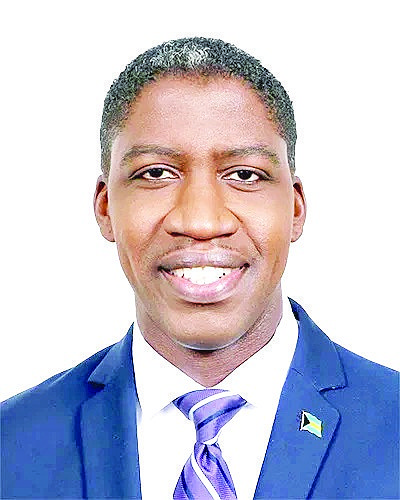
Zane Lightbourne
By JADE RUSSELL
Tribune Staff Reporter
jrussell@tribunemedia.net
ENVIRONMENT Minister Zane Lightbourne has pledged to investigate how cancer-linked cadmium levels entered into mangroves in East Grand Bahama amid heightened calls for government action.
His comments in the House of Assembly yesterday follow the release of a University of The Bahamas study that found cancer-linked cadmium in East Grand Bahama mangroves at more than 700 times the reference level.
The findings raise concerns about possible cancer and other health risks and suggest that heavy metal contamination in Bahamian mangroves may be far more serious than previously understood.
East Grand Bahama MP Kwasi Thompson last week called on the Davis administration to act on the findings by allocating government funding for further research.
He said his constituents were deeply concerned and wanted to know what happens next.
Mr Lightbourne, who previously described the findings as inconclusive, said the government does not dispute the study and will commission an independent assessment to verify its findings.
He also said there was no need for immediate public health alarm.
He emphasised that the study tested only sediment and did not examine marine species or drinking water. However, he said the government was taking steps to investigate the contamination and verify the findings.
The government also plans to meet with the UB researchers and continue working with them as the investigation progresses, he added. It will also commission an independent assessment of the findings.
“No responsible government acts on a single study before it is checked, and in some cases, rechecked,” Mr Lightbourne told Parliament.
Researchers found that cadmium concentrations in East Grand Bahama averaged 442.58 milligrams per kilogram of sediment, compared with a reference value of 0.6mg/kg.
In Dover Sound, the average was 25.64mg/kg, although cadmium was undetectable at three of the five sampling locations.
The researchers said the concentrations were substantially higher than those reported in comparable studies of coastal and mangrove environments elsewhere.
At three locations in East Grand Bahama, where contamination was most severe, they recommended precautionary measures, including consideration of public advisories and further assessments of potential human exposure.
Responding to Mr Lightbourne's remarks yesterday, Mr Thompson agreed that the findings should be independently verified and the source of the contamination identified.
He also suggested officials hold a town hall meeting with residents to provide updates.
Mr Lightbourne said the government also intends to establish reference values for metals in Bahamian soil, noting the country currently has no such figures.
He said officials would work to determine how the cadmium entered Grand Bahama's coastal waters, adding that the investigation would also be treated as an enforcement matter.
Mr Lightbourne said mangroves did not produce the cadmium but had captured and retained it. He warned that clearing or dredging mangroves at affected sites could release the metal back into the water.
As a result, the Ministry of Environment will require environmental assessments for applications to remove or dredge mangroves in the affected area to consider the risk of releasing the contaminants.
Mr Lightbourne said he had been advised that there was no basis for an immediate public health concern and that no public advisory was warranted before the findings were independently verified.
Meanwhile, the source of the contamination remains unknown.
The researchers listed several possible contributors: industrial discharge, improper waste disposal, stormwater carrying contaminated material to the coast, illegal dumping around Freeport and electronic waste. They also said Hurricane Dorian’s flooding and storm surge may have redistributed contaminated material along the coast in 2019. However, without sediment readings from before the storm, they could not say whether Dorian played a part.




Comments
Use the comment form below to begin a discussion about this content.
Sign in to comment
OpenID