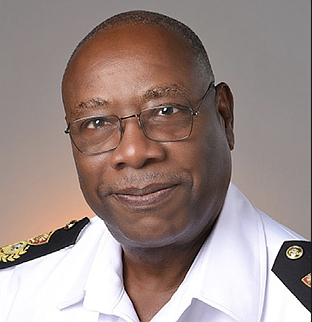
Daniel Ferguson
By DANIEL S FERGUSON
Five years after the Public Procurement Act 2021 came into force, an important question remains: Has the Public Procurement Department become an effective guardian of compliance, competition and accountability, or is its performance still difficult to measure?
In my first article last week, I examined leadership, institutional independence and the potential conflict that could arise if the acting chief procurement officer participates in the Ministry of Finance procurement committee while also holding broader responsibilities. This piece considers what those concerns mean in practice, particularly where the Ministry of Finance is itself the procuring entity.
Procurement reform was intended to change how public money is spent, not merely establish a department or introduce an electronic tendering platform. Five years later, where are the measurable results?
Administrative accountability, not political blame
This article does not seek to blame the minister of finance or any other Cabinet minister. Ministers remain accountable for their own lawful decisions and policy responsibilities, but the routine administration of procurement, monitoring, record-keeping and reporting involves public officers and procuring entities.
The Ministry of Finance’s financial secretary has a central administrative leadership role within the Ministry of Finance. The acting chief procurement officer leads the Public Procurement Department within the applicable statutory framework. Procurement committees and authorised officials also bear responsibilities for their own decisions. The issue here is whether these administrative arrangements deliver effective controls and independent scrutiny.
The acting chief procurement officer’s candid remarks
In October 2023, Carl Oliver, the acting chief procurement officer, publicly acknowledged the difficulty of bringing ministries, departments and agencies into compliance with procurement requirements. His reported remarks pointed to the need to change established practices and institutional attitudes.
That acknowledgment was understandable during implementation. It is less satisfactory as an enduring explanation. What has changed since 2023, when the revised Public Procurement Act was passed into law? How many entities now comply with their obligations? How many breaches have been identified, corrected or referred to the proper authority?
Workshops and technology matter, but they are not evidence that the law is being followed. The real test is whether departures from the rules are detected and addressed.
Direct awards and the duty to scrutinise
The Public Procurement Act 2023 permits direct awards in specified circumstances. They are lawful exceptions, not an unrestricted alternative to competition. The applicable justification, approvals and records must support their use.
Where competition required by law is bypassed, qualified suppliers may be denied opportunities, the Government may lose the benefit of competitive prices, and taxpayers may lack assurance of value for money. Yet an unexplained direct award is not automatically proof of illegality. That conclusion requires the relevant procurement documents and facts.
Who checks whether a direct award meets the legal conditions? Who identifies an improper procurement method? What happens after a potential breach is found? These questions are especially pressing when the Ministry of Finance is reportedly conducting the procurement itself.
‘The Purchaser’s’ questions - And the Ministry’s silence
A letter written under the name ‘The Purchaser’ has raised important questions about the proposed Cook-Chill food preparation system for the Bahamas Department of Correctional Services (BDCS). It asked whether suppliers had competed, how the selected supplier was chosen, and what approvals and financial commitments were involved.
The letter also questioned a reportedly refurbished warehouse, its ownership and rental arrangements, the ownership of equipment, possible Customs concessions, beneficial ownership interests and the engagement of a project consultant. These matters require verification; the questions by themselves are not allegations or proof of wrongdoing.
Information available to me indicates that the Ministry of Finance is acting as procuring entity for the Cook-Chill system. Yet, to my knowledge, the Ministry of Finance has made no public declaration confirming its role, explaining the procurement method or identifying the contractual arrangements. Its precise involvement should be confirmed through the relevant records.
If the Ministry is the procuring entity, a concern identified in my first article becomes immediate. The Public Procurement Department operates within that Ministry, while the acting chief procurement officer is alleged to participate in its procurement committee.
Did the committee consider this project? Did the acting chief procurement officer participate and, if so, as a voting member, adviser or observer? Was there a competitive tender? If not, what legal grounds justified another method, and who approved it?
Most importantly, who independently scrutinises a procurement decision if the official ordinarily associated with broader procurement oversight participated in making it? What recusal or alternative review arrangements apply?
These questions do not establish an wrongful award or misconduct. They ask whether the system can distinguish procurement decision-making from its subsequent examination. A ministry central to public financial management should be able to demonstrate that its own transactions meet the standards expected of everyone else.
The full financial picture
The Cook-Chill project also raises questions extending beyond the initial equipment purchase. If warehouse refurbishment, rent, installation, consultancy, maintenance and operating expenses form part of the arrangement, the public should be able to understand its total cost and duration.
Who pays for improvements to the premises? Who owns the equipment after installation? Were alternative systems considered, and what value for money analysis was undertaken? A potentially beneficial food preparation system still requires a properly documented procurement process.
If a tender was held, the records should show it. If a direct award was used, its justification should be available for lawful scrutiny. If no contract has yet been awarded, the Ministry of Finance should clarify the project's status.
Transparency and measurable performance
Publishing contract information is an important safeguard, but an electronic platform cannot guarantee that every procurement is properly recorded or lawful. Reporting must be timely, accurate and sufficiently complete to permit scrutiny.
The financial secretary and acting chief procurement officer should be able to explain the administrative safeguards that apply when the Ministry of Finance acts as a procuring entity. They should also be able to report how many entities comply with procurement requirements, how many suspected breaches have been identified and what corrective actions or referrals followed.
These questions do not assume that either official personally approved every award or possesses every enforcement power. They seek an account of how the wider administrative system functions, including when another authority must investigate or act.
Five years later: Evidence, not assurances
The promise of procurement reform was fair competition, transparent decisions, accountable officials and value for money. Those outcomes cannot be measured by the existence of legislation or the number of training sessions held.
A useful next step would be a published five-year procurement compliance and performance report identifying achievements, weaknesses, corrective measures and remaining gaps. The Ministry of Finance should also clarify its reported role in the Cook-Chill project and the safeguards governing any decisions taken within its own procurement structures.
This is not a demand for political blame or a presumption of wrongdoing. It is a demand for administrative accountability. The public should not have to rely on informal inquiries or anonymous correspondence to learn how significant procurement decisions are made.
The question is not whether The Bahamas has a Public Procurement Department. It is whether that Department, within the wider statutory framework, can demonstrate that procurement rules are being followed - even when the Ministry of Finance itself is involved.
After five years, assurances are not enough. The public deserves evidence.
NB: Daniel S. Ferguson, FCIPS, CM is the author of Public Procurement in The Bahamas: Lessons Learned from Reform, Practice, and Experience.
He is retired Chief Petty Officer (RBDF), Lead Investigator – 2004 Lorequin Commission of Inquiry, former Chief Supplies Officer, Ministry of Health; Procurement Consultant, Ministry of Finance; Adjunct Facilitator in Public Procurement, University of The Bahamas; former Component Coordinator for the IDB-sponsored Public Financial Management Reform Project.
Mr Ferguson led the drafting team for the Public Procurement Act 2021 and Regulations, assisted in developing the University of The Bahamas professional procurement officers training framework, and managed the development of the e‑Procurement Supplier Registry.




Comments
Use the comment form below to begin a discussion about this content.
Sign in to comment
OpenID