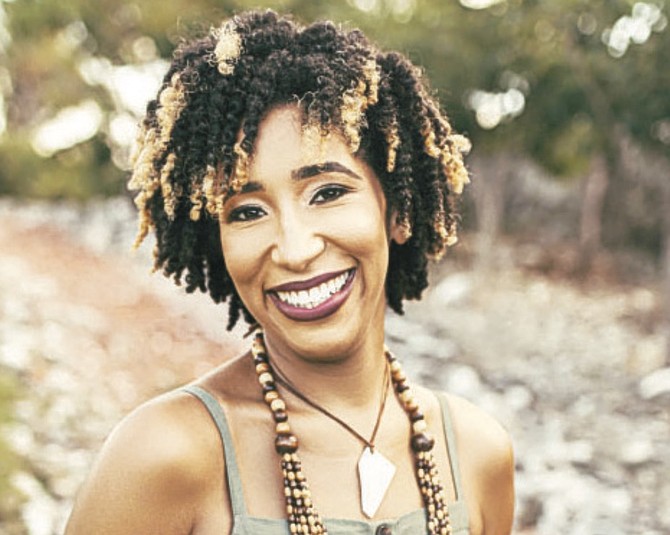
Alicia Wallace - Director of Equality Bahamas
By ALICIA WALLACE
THE Global 16 Days Campaign (Against Gender-Based Violence) begins in 14 days. There will be discussion about domestic violence, sexual violence, structural violence, and gender inequality. Along the way, people will ask what they could possibly do about gender-based violence. There are several answers to that question, from raising children to respect themselves and other people to naming and rebuking violent behaviour, whether or not it’s physical, as soon as it is witnessed. People often assume they are powerless, ignoring the resources and access available to them.
The students on the editorial board at the Cornell University newspaper gave a master class is recognizing power and using it to interrupt violence.
In its September 21, 2026 publication, The Cornell Daily Sun’s “Cornell Won’t, We Will” opens with the seven names of the men accused of drugging and gang raping a Cornell student now known as Jane Doe. In October 2024, Jane Doe was reportedly sexually assaulted for seven hours by seven Chi Phi fraternity members. The case sparked widespread outrage and lead to many conversations about sexual assault, rape culture, university campus safety, fraternity and “bro” culture, Title IX (in the US context) and alternatives to criminal justice, survivor support, victim-blaming, and the complicity and violence of men who choose not to intervene.
The fraternity members used a group chat of 57 to invite other members to participate in the alleged rape of the heavily drugged young woman. Jane Doe swatted at them, expressed her discomfort, and was certain they could see that she was in no condition to consent to sexual activity, but they ignored her. The ketamine in her system prevented her from escaping. In a hearing, Jane Doe told Cornell investigators, “I felt like bait. I felt like lions around me. It was just a totally debilitating place to be in.”
Failed system
After the assault, Jane Doe went to Cornell Health seeking treatment for a urinary tract infection. Upon disclosing that she got the infection “in a traumatic way,” she should have been provided with a rape kit and referral to medical professionals with training in handling sexual assault cases in a medical setting. Instead, she was simply told to talk to someone. She was not equipped with the tools or the support to make a report or access further care.
Not all men?
Jane Doe collected evidence, including the clothing she wore on the night of the rape and photos of bruises on her body. She requested a rape kit. She reported to campus police. She told them that she agreed to a threesome, but not to other sexual activities. At some point, being more intoxicated than she had ever been in her life, she felt incapable of making decisions. Not a single man who entered the room on the night of alleged rape, and not a single man in the group chat, said or did anything to stop their fellow fraternity members from raping the young woman and irrevocably changing her life.
As #MeToo became popular, the #NotAllMen response became common. When women talk about experiences with men who demean, harass, grope, and rape, men are quick in their attempts to defend themselves and one another. They attempt to victim-blame, searching for excuses for the vile behaviour of men they know and, in many cases, the men they are. They sometimes insist that they are “good guys” and fail to demonstrate this when they invalidate the experiences of women and try to shift the focus to themselves. “Look at me!” they seem to say. “I’m a good guy, and it makes me sad when you talk about rapists!”
Time after time, without having to look, we see examples that run contrary to the #NotAllMen rhetoric. Zero in 57 men saw the messages in the group chat, decided it was wrong, said as much to the men in the group chat, and intervened in the named room in which the incident was taking place for hours.
What would it look like for a man to demonstrate that not all men are rapists, rape apologists, and rapist enablers? It’s not silence, and it’s not inaction.
Coercion, intoxication, and inability to consent
Describing her experience of ketamine, Jane Doe said, “You look like an operating human being… You don’t look dead or asleep necessarily. So, lights are on, but nobody’s home. Your brain is not functioning at its proper level.”
One of the accused men said, in a text message to Jane Doe, “I just wanted to apologize for how things went down the other night.” He claimed that he and another man were unable to stop what was happening and make everyone leave due to the effects of drugs and alcohol.
In November 2024, Jane Doe sent a text message to one of the accused saying, “let’s be clear that 90% of what happened that night was not consensual. i was given more [ketamine] than i can remember and i know that i told u i felt uncomfortable and i didn’t know anyone in the room.”
Jane Doe’s attorney Thomas P. Giuffra said, “Ms. Doe’s internal processing went from denial, to shame, and ultimately acceptance that she had been raped by people that she thought were her friends. Her reactions were a textbook reaction to trauma.”
Whether or not consent is the primary issue in this case has been debated. While many see the need for comprehensive sexuality education and an emphasis on consent, others take the position that many men understand consent, do not care about women’s bodily autonomy, are prepared to be violent in response to refusal, and choose to use substances debilitate victims, whether or not they are known to them.
Student journalism and activism
This case, from 2024, is only in the news now because a lawsuit had been filed, and the student newspaper took action. Student journalists, completely opposed to the anonymization of the accused men and the obscuring of details around the case, made the decision to publish an article about it, exposing the issues around sexual violence at Cornell University.
Many millennials remember the story of Emma Sulkowicz, who reported rape by a fellow student with it resulting in criminal charges being filed. In protest to his continued enrollment and presence on campus, she carried a blue mattress around campus—a performance art piece and a visual representation of the weight carried by survivors every day. People were welcome to help her carry the mattress, and she accepted the help. Emma Sulkowicz committed to carrying the mattress for as long as the rapist was allowed to attend Columbia University, and she carried it across the stage at graduation where the university president snubbed her, refusing to shake her hand.
The Cornell Daily Sun decided to help Jane Doe carry the weight. It called on the entire campus to carry the weight. It called on the public to carry the weight. It’s the weight of knowing, the weight of waiting, the weight of being ignored and insulted, the weight of pressing for justice, and the weight of being alone. Many people have now come together to share the weight, in hopes of making it lighter for Jane Doe.
The student journalists said, “A university's obligation to the physical safety of its students is not one commitment among several, to be weighed against reputation or litigation exposure. It is antecedent to everything else the institution does. Cornell exists to teach and to educate, and instruction presupposes a student capable of receiving it, which presupposes, in turn, a student who is not afraid to attend their lecture hall. Safety is not adjacent to the educational mission — safety is, in fact, its precondition.”
Highlighting wrongs, demanding action
In the article, the student journalists question the failure to make the public deposition, Title IX investigation, and conclusion accessible, the allowance for the accused men to access education in a “secure and nourishment environment” while Jane Doe could not, and the failure to inform Jane Doe of the outcome of the investigation.
Title IX is separate from the criminal justice system. When reporting sexual harassment or sexual assault, students can choose to use Title IX, the criminal justice system, or both. The reporting process begins with a signed complaint. The institution must set a timeline and provide updates should delays occur. Written notice is given to both parties, the institution gathers evidence and parties can have attorneys or advisors involved, evidence can be reviewed by both parties, an investigative report is produced, a hearing is held, a written decision is given, remedies and supportive measures are determined by the institution, and either party can appeal. The Title IX process can lead to administrative discipline (e.g. suspension, expulsion) within the institution, but it’s not a criminal case and does not lead to prison sentences.
The student newspaper continued, “Tackling sexual assault as an academic matter—complete with its charts and facts and figures—offers no respite to the victims who have undergone physical and mental abuse. Academic “solutions,” like the essays, allegedly offered to the defendants to mitigate their suspensions, is belittling to the severity of the crime. This is not a dark chapter in Cornell’s history, it’s a morbid pattern, only rectified with thorough criminal investigations in the hands of parties independent of the University — the Ithaca Police Department and the Tompkins County district attorney. As for Cornell, administrators have allowed the idea that enough ambiguity, enough he-said-she-said, enough familial connections, enough money will allow you to get off scot-free.”
The writers called on the university to be transparent about its decision-making, sharing the process by which it decides to lift the suspension of a student accused of rape and to share with the complainant the outcome of her own investigation.




Comments
Use the comment form below to begin a discussion about this content.
Sign in to comment
OpenID