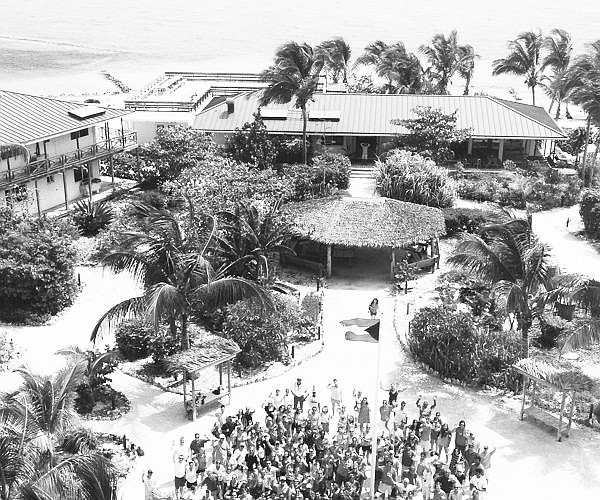
STUDENTS and teachers at the Island School in Eleuthera.
FUNDING for the Bahamas Reef Environmental Educational Foundation (BREEF), The Island School and University of The Bahamas will expand environmental education, scholarships and marine research opportunities for young Bahamians thanks to more than $500,000 in new grants.
The Bob & Jeanne Coughlin Foundation has committed the money to the three Bahamian organisations to help develop the next generation of environmental conservation leaders.
The funding will support initiatives ranging from school-based environmental education and university scholarships to marine science research and hands-on conservation experience.
The investment is aimed at giving more young Bahamians the knowledge, practical experience and opportunities needed to help protect the country’s natural environment.
“We are all responsible for protecting the natural resources of The Bahamas. Everyone has a role to play,” said Bob Coughlin, chairman of the foundation.
“We want to create opportunities for young Bahamians to understand what makes this country so special, experience it first-hand and develop the knowledge and skills to protect it. If we are going to secure the future of our environment, we must invest in the people who will carry that responsibility forward.”
Under the initiative, BREEF will introduce a one-year environmental education pilot programme in three to five Exuma schools, expected to reach approximately 250 students and between 10 and 15 teachers.
The programme will include teacher training, practical environmental projects and participation in BREEF’s Eco-Schools and Young Reporters for the Environment initiatives.
Casuarina McKinney, BREEF’s executive director, said the funding would allow students and teachers in Exuma to connect with established Eco-Schools programmes in The Bahamas and internationally.
“Through meaningful hands-on learning we are supporting teachers and empowering students to become active stewards of their environment,” she said.
At The Island School, the foundation’s support will help secondary school graduates gain practical experience in environmental and marine science through its Bahamas Environmental Steward Scholars (BESS) programme, with preference given to students from Exuma.
Additional funding will support research through the Cape Eleuthera Institute, including coral restoration and conch research in Exuma.
Chris Maxey, head of school at The Island School, said the investment would create opportunities for Bahamian students to develop practical skills in marine science and conservation while contributing to research aimed at protecting the country’s marine environment.
He said the focus on students from Exuma would also help strengthen conservation efforts across the wider Bahamian archipelago.
At the University of The Bahamas, the funding will provide scholarships for students from Exuma, support the Exuma Research Initiative through the Small Island Sustainability Research Complex and help finance field studies in the Family Islands.
The initiatives are intended to expand access to higher education, strengthen scientific research led by Bahamians and give students opportunities to investigate environmental challenges affecting their communities.
UB president Robert Blaine welcomed the partnership, saying private-sector support was important to achieving the university’s educational and national development objectives.
“Investments like this one support UB in fulfilling its mission to drive national development through research initiatives, which address the challenges of today, while protecting a better tomorrow,” he said.
The latest grants build on the foundation’s existing support for environmental education at Harbour Island Green School and conservation management through the Bahamas National Trust.
Alessandra Holowesko, the foundation’s director of giving in The Bahamas, said the organisation was taking a long-term approach to developing environmental awareness and expertise among young Bahamians.
“Education is a starting point, but we also want young people to have the opportunity to experience the environment, participate in research and see where those interests can lead,” she said.
“By working with strong partners, we can begin to connect those opportunities, understand what works and build on that progress over time.”
Mr Coughlin said the ultimate ambition was to encourage greater appreciation of the country’s natural resources while giving young Bahamians more opportunities to understand and experience the environment they will be responsible for protecting.




Comments
Use the comment form below to begin a discussion about this content.
Sign in to comment
OpenID