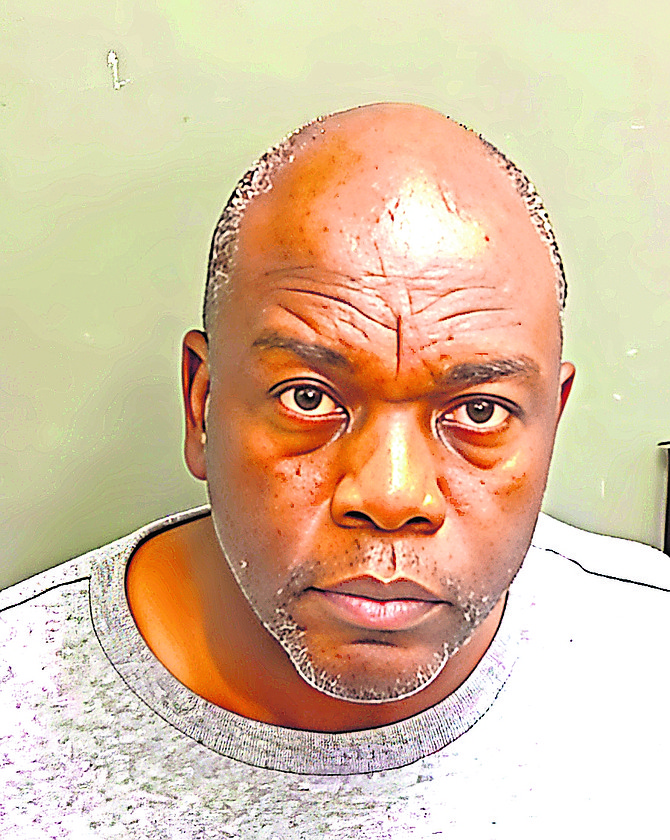
Eric Gardiner
By RASHAD ROLLE
Tribune News Editor
rrolle@tribunemedia.net
JONATHAN “Player” Gardiner’s lawyer has told a US court that the $30,000 he carried on Election Day was for “campaign contributions and expenses” as he travelled between islands with voters or campaign workers, insisting that none of it, including the envelope bearing a politician’s name, was a drug bribe.
US prosecutors argued earlier this month that the timing supports their theory that the money was a bribe. They pointed out that Gardiner carried the cash on Election Day rather than during the campaign, and described the politician as a male, incumbent MP, who was reelected that day. In a reply filed in a New York federal court on Friday, Gardiner’s lawyer, Susy Ribero-Ayala, said that argument “overlooks the political activity occurring on election day itself”.
Gardiner disputes that any of the Bahamian currency seized from him was drug proceeds or a drug-related bribe, the filing says. That includes the approximately $5,000 in the envelope bearing the politician’s handwritten name. The politician’s name and the timing must be weighed against the defence’s explanation and the way the cash was actually packaged, Ms Ribero-Ayala wrote, and neither proves by itself that the envelope held a narcotics payment.
The filing does not say whose campaign the contributions were meant for, or what the expenses were.
Claims that cash changes hands to sway voters have coloured Bahamian elections for years but have been difficult to prove.
The defence also says the cash prosecutors want to keep as trial evidence was taken to be exchanged for US dollars three times. According to its account of a DEA report handed over on November 11, there were attempts to convert the money at Loomis, a cash-handling, security, and logistics company, on May 28, at Bank of America on June 8, and at an airport currency exchange on June 24. The last attempt reportedly failed because the notes were “wet and moldy”.
“If the original notes must be preserved as evidence, the government should explain why agents repeatedly sought to exchange them,” Ms Ribero-Ayala wrote.
Prosecutors say the money is being kept in a DEA vault as evidence for trial.
The defence says the same report gives conflicting accounts of where the cash was. One section says it was shipped with other exhibits to DEA Special Agent Michael Coleman in Virginia on May 15. Another places it in storage in Orlando during the later exchange attempts and describes it being physically handed to Mr Coleman and another agent on July 2. The report bears a preparation date of May 22, but it was signed on November 8 and 9 and its account runs into July.
The 18-page reply backs pretrial motions in which Gardiner is seeking to suppress evidence, force prosecutors to produce records and identify the conduct behind the charges, and have the court consider conditions under which the cash could be returned. The judge has not yet ruled on the motions, and the defence’s claims about the money, the searches and Gardiner’s detention have not been tested in court.
Gardiner, 58, a convicted drug trafficker, was one of 11 people rescued after a plane flying from Marsh Harbour, Abaco, to Grand Bahama crashed off the Florida coast on May 12. The others were allowed to leave. Gardiner was taken into custody.
The politician, known in court papers only as “Politician-1”, has not been named or charged. US authorities allege he met an undercover DEA source and a drug pilot inside a Parliament building in October 2024 to discuss a cocaine shipment.
Last week, West Grand Bahama MP Kingsley Smith flatly denied being the unnamed politician.
He also denied ever meeting anyone in a Parliament building to discuss drug shipments.
“Not friggin’ me!” Mr Smith told The Tribune. “Like I say, I deny that. I don’t do nonsense man.”
Gardiner’s defence again pointed to a Bank of The Bahamas receipt showing that he withdrew $20,000 from the account of Top Notch Builders Limited on May 11, the day before the flight. It said prosecutors acknowledged receiving that receipt at a hearing on June 25. Prosecutors have made a point about who owns the business, but Ms Ribero-Ayala said that does not cancel out the documented withdrawal or show the money came from drugs.
The filing also questions how Gardiner came to be held in the US.
According to US Customs and Border Protection records produced on November 4, Gardiner arrived in Melbourne, Florida, at about 2.30pm on May 12. The records describe “Parole for Prosecution based on DEA probable cause arrest”. Some of the entries recounting the events of May 12 were created on May 14. The DEA’s own report describes Gardiner being apprehended on May 14, taken to Seminole County Jail, and making his first court appearance in Orlando on May 15.
Ms Ribero-Ayala asked the court to determine when Gardiner’s criminal detention began, whether it rested on criminal, immigration or border-inspection authority, when a judicial officer first found probable cause, and whether any delay was used to gather evidence to justify keeping him in custody.
She also challenged the handling of Gardiner’s phones and a water-damaged notebook, which were held for about 17 days between May 12 and a search warrant issued on May 29.
In his affidavit, Special Agent Coleman said officers opened the wet notebook to dry it, saw what appeared to be payment notations, and conducted no further review. The defence says photographs of the notebook’s inside pages do not establish when they were taken. It wants the original timestamps, to show whether the pages were photographed before or after the warrant was issued.
The defence is pressing for what is known in US law as a Franks hearing, where a defendant can challenge a search warrant by showing that the officer who sought it deliberately or recklessly gave the judge false information. It says Coleman’s affidavit described a brown paper bag containing about $30,000 and bearing a politician’s handwritten name. According to the defence, the affidavit relied on that packaging to infer the money was drug proceeds, and used the cash to tie the events of May to older trafficking allegations. The defence says photographs show separate bundles of cash and a limited labelled wrapping. Prosecutors have acknowledged a date error in the affidavit, the filing says.
The defence accepts that records link one of the seized phones, an iPhone 12 Pro, to a phone number the filing refers to as “6984”, which Gardiner gave to border officials, and to an iCloud account identified as “Andrew Rosebud”. But it says that link does not settle whether the phones were lawfully obtained, kept and examined.
Ms Ribero-Ayala also said prosecutors had still not identified the firearms conduct behind two of the three charges Gardiner faces in New York. She asked the court to make them say whether an alleged nine-kilogram transaction in Georgia in February 2023, and the May 12 flight and the cash on board, are alleged acts in the drug conspiracy or are being offered for another purpose.
The defence also kept open an argument that, if prosecutors move to freeze the cash for forfeiture, legitimate money Gardiner needs to pay his lawyer of choice is protected under the US Constitution.
Gardiner has pleaded not guilty in New York to conspiring to import cocaine, possessing firearms in furtherance of a drug trafficking crime, and conspiring to possess firearms. He also faces a separate indictment in Georgia and remains in custody. His New York case is linked to the November 2024 indictment of former police chief superintendent Elvis Curtis and others. The trial is due to start on March 1.
Gardiner was jailed in the US in 2008 after being charged with 21 offences related to an international drug conspiracy. He is presumed innocent of the current charges.




Comments
Use the comment form below to begin a discussion about this content.
Sign in to comment
OpenID