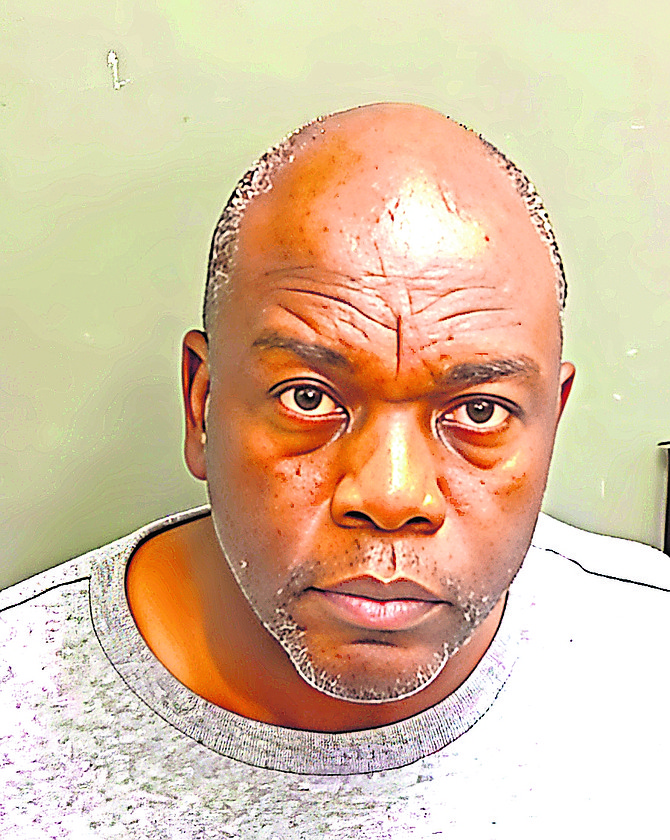
Eric Gardiner
By LEANDRA ROLLE
Tribune Chief Reporter
lrolle@tribunemedia.net
A US federal judge has refused to throw out evidence from Jonathan "Player" Gardiner's three mobile phones, ruling that a politician's name on the cash Gardiner carried when his Election Day plane crashed off Florida was equally incriminating whether it was written on a bag or on wrapping around some of the money.
In a 22-page ruling on Monday, US District Judge Lewis Liman rejected Gardiner's bid to suppress the evidence and his request for a Franks hearing, which tests whether an investigator lied or acted recklessly in the sworn statement used to obtain a search warrant.
The judge also refused to order prosecutors to set out more details of the charges in a bill of particulars, finding the defence already had enough information "to prepare for trial, prevent surprise, or interpose a double jeopardy claim."
Gardiner, 58, a convicted drug trafficker, is charged in the Southern District of New York with conspiring to import cocaine from The Bahamas into the United States and with firearms possession and firearms conspiracy offences linked to that conspiracy, charges he has denied, and he is due to stand trial on March 1, 2027.
At the centre of his challenge was the roughly $30,000 in Bahamian currency found in a cross-body bag he was carrying when the US Coast Guard pulled him and ten others from the sea on May 12, after the plane they were travelling in crashed into the water.
The search warrant affidavit, sworn by Drug Enforcement Administration Special Agent Michael Coleman, described a brown paper bag containing $30,000 "labeled with the handwritten name of Politician-1", but the defence said photographs of the seizure show the name only on torn wrapping around part of the cash.
Politician-1 has not been named or charged, though prosecutors described him in a filing earlier this month as an incumbent male MP who was re-elected on May 12.
Gardiner's lawyers also argued that the affidavit should have told the magistrate that May 12 was Election Day in The Bahamas, that the country does not limit political contributions, and that Gardiner had withdrawn about $20,000 in cash the day before the crash that could have been used for campaign contributions.
Judge Liman said the cash mattered because Gardiner was carrying enough money to serve as a bribe, marked with the name of a politician accused of taking bribes to protect a trafficking organisation's shipments.
"That remains true whether the name appeared on the bag itself or on wrapping around some of the currency," the judge said.
He said it would have made no difference had the affidavit included what he called Gardiner's "self-serving, innocent explanation for the cash," because a magistrate "is not required to accept defense counsel's unsupported rationalizations made after the fact."
The judge said the election explanation was first given by defence counsel at Gardiner's detention hearing on June 25, nearly a month after Agent Coleman swore the affidavit, and that Judge Gregory Woods had heard that explanation and still concluded that "the weight of the evidence against the defendant as proffered by the government is very strong."
The defence also attacked the timeline in the affidavit, which in one place wrongly gave Gardiner's arrest date as May 16, arguing that it should have stated that he was rescued and his bag, phones and notebook first seized on May 12, that he was charged on May 14 and that he first appeared in court on May 15.
His lawyers said those errors prevented the magistrate from judging whether the seizure of his belongings, and any access to them before the warrant was issued, were lawful, and they questioned whether officers had looked into the phones early, pointing to photographs that record the phones' IMEI identification numbers.
"Corrected as Gardiner proposes, the Search Warrant Affidavit still establishes ample probable cause," Judge Liman said, finding that nothing in the case for the warrant turned on the dates of Gardiner's rescue, arrest or court appearance, or on when his property was first seized.
The judge found no sign that any error was deliberate or reckless, noting that "defense counsel conceded that there is no evidence that SA Coleman acted intentionally or recklessly, and the record confirms as much."
He described the wrong arrest date as an inadvertent mistake, since Agent Coleman gave the correct date elsewhere in the affidavit, and said the agent would have had no reason to say the bag bore Politician-1's name unless he believed it.
Gardiner also argued that the affidavit failed to link the phones to any number he used in crime and relied only on the general idea that phones store data, but the judge said carrying several phones can point to drug trafficking and that the evidence here went further.
He cited text messages that the criminal complaint says a co-conspirator sent Gardiner during a February 2023 cocaine shipment to a Georgia-based trafficking organisation, including one asking whether he needed to "buy more time" and another thanking him once the deal was done.
"The Government need not establish that Gardiner used his phones to engage in illegal activity," the judge said. "It is sufficient that there be a 'fair probability' that evidence of criminal activity would be found on the phones."
He also rejected arguments that a statement about Gardiner from co-defendant Luis Fernando Orozco-Toro was unreliable because it was not based on direct contact with him, and that claims Gardiner used his construction business to launder drug money required specific transactions to be identified.
Prosecutors confirmed at a hearing on November 20 that they intend to use Gardiner's alleged dealings with the Georgia organisation, including a nine-kilogram cocaine shipment he is accused of sending from The Bahamas to Miami in February 2023, as part of the New York conspiracy case, the ruling said.
Judge Liman also found no unreasonable delay in the 15 days between the DEA taking custody of the phones on May 14 and the warrant application on May 29, noting that five of those days were weekends or the Memorial Day holiday and that Gardiner, held in custody throughout, never asked for his property back.
The judge denied without prejudice Gardiner's request for prosecutors to hand over more records, including documents about his rescue and arrest, saying the two sides' filings did not show they had discussed which materials were still outstanding and noting that the defence had not filed an affidavit required by the court's local rules.
He said some requests, such as photographs of the seized cash and phones and chain-of-custody records, appeared to fall well within prosecutors' disclosure duties, while others, including maintenance records and the legal operating status of the aircraft, what officers knew when they arrested Gardiner and how the other rescued passengers were treated, appeared at first glance to go beyond them.
Defence lawyers must confer with prosecutors by November 24 and file any renewed request by November 30.
Gardiner's separate bids to have the $30,000 returned and for a hearing over the seized money were treated as withdrawn after his lawyer dropped them at the November 20 hearing.
Prosecutors told the court, without dispute from the defence, that they had already handed over full extractions of Gardiner's three phones, material from co-defendants' devices and accounts, confidential-source debriefings, video and audio recordings of informants' meetings with the accused, and recordings of Gardiner's jailhouse calls.
The wider case stems from a November 2024 indictment, later expanded, of 13 men accused of smuggling cocaine through The Bahamas into the US with the protection of corrupt Bahamian officials, including high-ranking police and defence force officers.
That indictment alleges that former police officers Elvis Curtis and Prince Symonette carried firearms while wearing their Royal Bahamas Police Force uniforms and meeting purported drug traffickers, conduct the judge said gave Gardiner notice of the firearms allegations against him.
Gardiner was held by US Customs and Border Protection after his rescue and arrested by the DEA on May 14, and he also faces a separate drug indictment in Atlanta, Georgia.




Comments
Use the comment form below to begin a discussion about this content.
Sign in to comment
OpenID