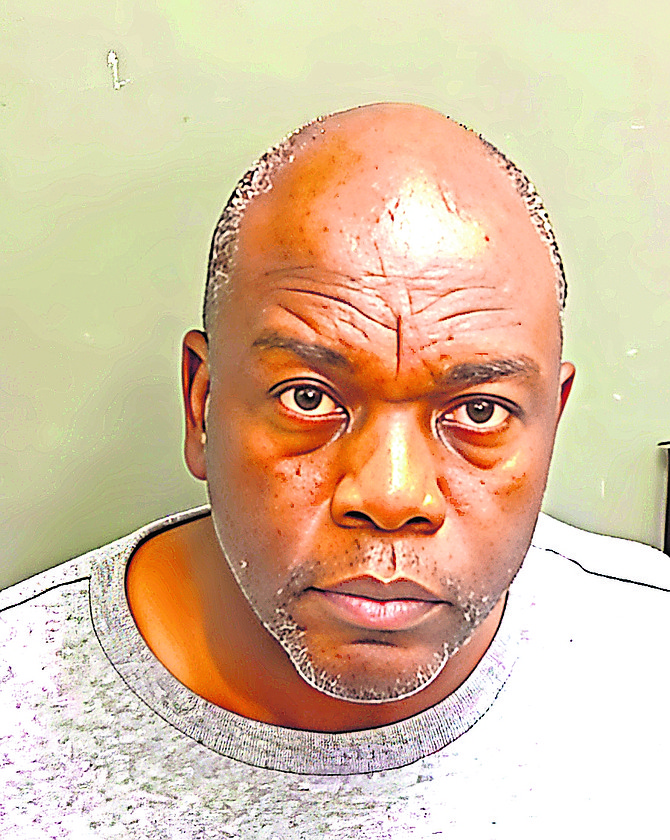
Eric Gardiner
By DAVID LEIGH
Editor-in-Chief
daleigh@tribunemedia.net
US prosecutors have indicated that Jonathan “Player” Gardiner could be the only defendant to stand trial in New York on the sprawling cocaine-smuggling conspiracy case involving alleged corrupt Bahamian officials.
The dramatic development is disclosed in a letter to US District Judge Lewis Liman from US Attorney James McDonald, who said prosecutors now expect that none of Gardiner’s 13 co-defendants will proceed to trial.
The development is likely to increase pressure on Gardiner, 58, to reconsider his not guilty plea.
In a letter dated November 25, McDonald told the judge that prosecutors had held discussions with defence lawyers representing Gardiner’s co-defendants.
“Based on recent discussion with defence counsel for Gardiner’s co-defendants, however, the Government presently expects that no defendant other than Gardiner will proceed to trial in this matter and, accordingly, that neither joinder nor a new superseding indictment will be necessary,” he wrote.
“The Government respectfully proposes to submit a further update to the Court in approximately 30 days, if any apprehended defendants other than Gardiner remain in the case at that time.”
The letter does not confirm that all the defendants have formally agreed to plead guilty, but indicates that prosecutors expect Gardiner to be the only accused still pursuing a trial.
As things stand, he could be the sole defendant facing a jury when proceedings are scheduled to begin on March 1, 2027.
Gardiner, a convicted drug trafficker, is charged in the Southern District of New York with conspiring to import cocaine from The Bahamas into the United States, as well as firearms possession and firearms conspiracy offences linked to the alleged trafficking operation. He has denied the charges.
He also faces a separate cocaine-trafficking conspiracy indictment in Georgia and remains in custody.
The New York prosecution is linked to the November 2024 indictment of former Royal Bahamas Police Force Chief Superintendent Elvis Curtis and others, who are accused of participating in a major drug-smuggling operation moving cocaine through The Bahamas into the United States with the protection of corrupt Bahamian officials.
Gardiner came to the attention of US authorities after the small plane in which he was travelling crashed into waters off Florida on May 12, this year’s general election day. He and 10 other people were rescued from the sea. He was subsequently taken into custody and arrested by US authorities.
He was carrying approximately $30,000 in Bahamian currency and three mobile phones, which have since become central to the prosecution’s case. His lawyers have maintained that the money was connected to election-related activity and was being transported on Election Day.
Earlier this week, Judge Liman rejected Gardiner’s attempts to suppress evidence obtained from his three mobile phones, as well as his request for a hearing to challenge the accuracy of the affidavit used to obtain the search warrant.
In a 22-page ruling, the judge also rejected the defence’s request for a bill of particulars, finding that prosecutors had already provided sufficient information for Gardiner to prepare for trial, avoid surprise and protect himself against the possibility of being prosecuted twice for the same offence.
At the centre of Gardiner’s challenge was the approximately $30,000 found in a cross-body bag he was carrying when the US Coast Guard rescued him and the other passengers.
A search warrant affidavit sworn by Drug Enforcement Administration Special Agent Michael Coleman described a brown paper bag containing the cash as being labelled with the handwritten name of “Politician-1”.
The defence argued that photographs of the seizure showed the name written not on the bag itself but on torn wrapping around some of the currency.
Politician-1 has not been named or charged. Prosecutors have described the individual in court filings as a male incumbent MP who was re-elected on May 12.
Gardiner’s lawyers also argued that the affidavit should have told the magistrate that May 12 was Election Day in The Bahamas, that there are no limits on political contributions in the country, and that Gardiner had withdrawn approximately $20,000 the previous day which could have been used for campaign contributions.
Judge Liman rejected the arguments, finding that the name written on the wrapping remained significant regardless of whether it appeared directly on the bag.
He said Gardiner was carrying sufficient cash to constitute a potential bribe, bearing the name of a politician whom prosecutors allege was accepting payments to protect a drug-trafficking organisation’s shipments.
“That remains true whether the name appeared on the bag itself or on wrapping around some of the currency,” the judge said.
He added that a magistrate was not required to accept what he described as the defence’s “unsupported rationalizations made after the fact”.
The judge also rejected the defence’s arguments about errors in the search warrant affidavit, including an incorrect arrest date, finding that correcting the timeline would not undermine the basis for the warrant.
He said there was no evidence that Agent Coleman had deliberately or recklessly provided inaccurate information.
Gardiner had further argued that the affidavit did not adequately connect his three phones to criminal activity. However, Judge Liman said the fact that he was carrying several phones, considered alongside other evidence, provided sufficient grounds for investigators to believe they might contain evidence of criminal activity.
The judge cited text messages allegedly sent to Gardiner by a co-conspirator during a February 2023 cocaine shipment involving a Georgia-based trafficking organisation. One message asked whether Gardiner needed to “buy more time”, while another thanked him after the transaction had been completed.
“The Government need not establish that Gardiner used his phones to engage in illegal activity,” Judge Liman said. “It is sufficient that there be a ‘fair probability’ that evidence of criminal activity would be found on the phones.”
Prosecutors confirmed at a November 20 hearing that they intend to rely on Gardiner’s alleged dealings with the Georgia organisation, including a nine-kilogram cocaine shipment he is accused of sending from The Bahamas to Miami in February 2023.
The judge also rejected arguments that investigators had unreasonably delayed applying for a warrant to search the phones, noting that the 15-day period included weekends and the Memorial Day holiday and that Gardiner had remained in custody.
The ruling came as prosecutors disclosed that they had already provided the defence with extensive evidence, including complete extractions of Gardiner’s three phones, material obtained from co-defendants’ devices and accounts, confidential-source debriefings, video and audio recordings of informants meeting accused persons, and recordings of Gardiner’s jailhouse telephone calls.
The wider investigation centres on allegations that cocaine was moved through The Bahamas into the United States over several years with the assistance of corrupt officials, including senior police and defence force officers.
The indictment alleges that former police officers Curtis and Prince Symonette carried firearms while wearing their Royal Bahamas Police Force uniforms and meeting people they believed to be drug traffickers.
The allegations have not been proven in court.
• See The Tribune for full report tomorrow




Comments
Use the comment form below to begin a discussion about this content.
Sign in to comment
OpenID