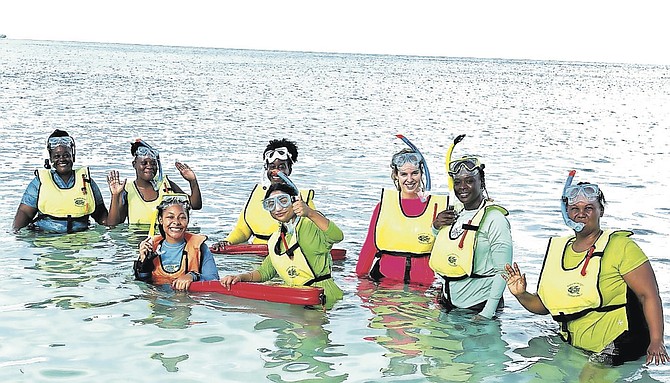
More than 80 educators from Abaco, Andros, Eleuthera, Exuma, Grand Bahama, Cat Island and New Providence gathered for the annual Eco-Schools Bahamas (ESB) Coordinators’ Workshop, hosted by the Bahamas Reef Environment Educational Foundation (BREEF).
By Fay Simmons
Tribune Education Reporter
jsimmons@tribunemedia.net
EDUCATORS from across The Bahamas are gaining new tools and sharing practical ideas to make environmental education more meaningful for students, as efforts continue to build a nationwide network of schools committed to sustainability.
More than 80 educators from Abaco, Andros, Eleuthera, Exuma, Grand Bahama, Cat Island and New Providence gathered for the annual Eco-Schools Bahamas (ESB) Coordinators’ Workshop, hosted by the Bahamas Reef Environment Educational Foundation (BREEF).
Held under the theme “Healthy People on a Healthy Planet: Transforming Food Behaviours for Sustainability”, the two-day workshop focused on strengthening educators’ ability to incorporate environmental awareness, climate education and sustainable practices into school curricula and everyday activities.
The first day of the workshop took place at the New Providence Community Centre, where participants exchanged ideas and explored approaches to helping their schools reduce their environmental impact. The programme continued the following day with a snorkelling experience at Sea Beach Promenade, giving educators an opportunity to experience firsthand the outdoor learning methods used to connect environmental lessons with the natural world.
A key focus of the workshop was equipping Eco-Schools coordinators with the knowledge and resources to guide their institutions towards the internationally recognised Green Flag Award, which recognises schools for their commitment to environmental sustainability.
Sally Johnson, Education Officer for the Social Studies Junior High Unit at the Ministry of Education, Science and Technology, said the participation of more than 80 educators reflected a shared commitment to environmental stewardship.
She said the long-term vision is for every school throughout The Bahamas to become an active Eco-School, with more institutions achieving Green Flag status.
Ms Johnson noted that strengthening partnerships among educators, government and environmental organisations is important to empowering teachers and students to take meaningful action on environmental protection, climate change and sustainable development.
For educators from the Family Islands, the workshop also provided an opportunity to exchange experiences with colleagues and return to their schools with new approaches to environmental learning.
Ashley Murray, who travelled from Clara A Evans Primary School in North Andros, said the sessions offered practical ideas she could apply in her classroom and through her school's Science Club.
“Workshops like these are important because they give us teachers new ideas and practical ways to make learning more meaningful for our students,” Ms Murray said. She added that the experience provided strategies for encouraging students to become more involved in protecting the environment.
Ms Murray said hands-on learning helps children become more curious, responsible and aware of how small actions can make a difference, reinforcing the importance of giving teachers opportunities to develop activities that connect classroom lessons with real-world environmental issues.
D'Nae Bethel-Young of Old Bight Primary School in Cat Island also described the workshop as informative, helpful and encouraging as educators continue to navigate the Eco-Schools programme.
In addition to professional development sessions, the workshop featured contributions from student leaders at Hillcrest Academy, who shared their school's experience achieving Green Flag status and implementing sustainable practices. Their presentations offered participating educators examples of how environmental initiatives can be introduced and maintained within a school community.
BREEF's Eco-Schools National Coordinator, Nicola Fernander, said the programme now includes 68 registered schools across The Bahamas, reflecting the continued growth of the national network.
Ms Fernander welcomed the participation of new coordinators and schools from both New Providence and the Family Islands, emphasising the value of collaboration among educators working towards common sustainability goals.
She said the network provides a platform for eco-educators to support one another, share successful approaches and identify ways to improve the environmental footprint of their schools and communities.
The workshop concluded with a public snorkelling experience at Sea Beach Promenade, where educators and community members explored the marine ecosystem. The activity demonstrated BREEF's outdoor classroom approach, giving participants a direct experience they can draw on when introducing students to marine conservation and the importance of protecting Bahamian waters.
Operated by BREEF since 2009, Eco-Schools Bahamas is part of a global programme active in more than 79 countries. Through environmental education, school-based projects and community engagement, the initiative supports educators in developing a culture of sustainability within their institutions.
With 68 schools currently enrolled, the programme continues to expand opportunities for teachers to integrate environmental responsibility into learning and encourage lasting changes in school practices.




Comments
Use the comment form below to begin a discussion about this content.
Sign in to comment
OpenID