BY ANNELIA NIXON
TRIBUNE Business Reporter
anixon@tribunemedia.net
A DISABLED advocate yesterday called for 15 percent of monies paid into so-called universal service funds by Bahamian and Caribbean communications providers to be dedicated to boosting digital inclusion for the group.
Kendrick Rolle, founder and lead consultant of the Disability Empowerment Outreach Group, speaking during a panel discussion at the International Telecommunication Union’s (ITU) 2026 World Telecommunications Policy Forum being held in The Bahamas, said greater access to technology and related training could allow persons with disabilities to enter digital workforce spaces that may otherwise remain inaccessible.
“Once they are trained using accessible devices, they are now able to enter the inclusive digital space and they will be able to work remotely - data entry, online monitoring, and other stuff like that,” Mr Rolle said. He added that this could be particularly beneficial for persons who are blind, deaf or hard of hearing, as well as people with neurodiverse challenges.
Mr Rolle also called on governments across the Caribbean to dedicate a portion of their universal service funds towards digital inclusion initiatives for persons with disabilities.
“The universal service funds that most Caribbean nations have access to, it is driven by taxing the telecommunications service providers,” he said. “They need to adopt that concept in using 15 percent of those funds collected from the universal service funds, and redirect those 15 percent for training and inclusive digital programmes and assistive devices.”
The proposal is based on the “15 percent for 15 percent” target emerging from the World Disability Summit, which Mr Rolle said calls for 15 percent of international development programmes to actively pursue disability inclusion, reflecting the estimated 15 percent of the global population living with disabilities.
Mr Rolle also argued that legislation should be amended to require communications providers to recognise persons with disabilities as a priority group. The Bahamas, he said, has already taken steps in that direction through the development of the Accessibility Bahamas app, which was designed by persons with disabilities to help empower the community.
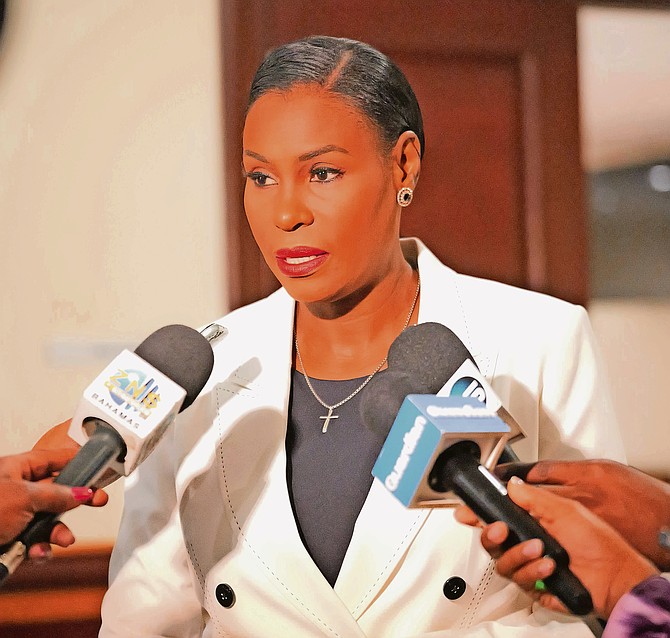
Meanwhile, Pia Glover-Rolle, minister of labour and the public service, told the same forum that The Bahamas must move beyond simply expanding access to communications services by ensuring persons with disabilities are equipped to participate meaningfully in the digital economy.
She added that digital inclusion cannot be measured by coverage alone, warning that women and girls, young people and persons with disabilities continue to face significant barriers to accessing and benefiting from technology.
“Real inclusion requires meaningful participation at all levels and by all people,” Mrs Glover-Rolle said. She pointed to the extra challenge faced by vulnerable groups, noting that a young Bahamian with a disability may confront both a technology gap and an accessibility gap, while a woman from a lower income household on a Family Island can simultaneously face cost, distance and gender barriers.
“If we are truly developing opportunities for everyone, we must address these layered realities,” she added. The issue has significant implications for the Bahamian labour market, particularly as businesses and government increasingly rely on digital platforms, remote work and technology-driven services.
Mrs Glover-Rolle pointed to several government programmes as evidence of the country’s efforts to build greater inclusion into education, training and employment initiatives. She said the Public Service Professional Engagement Programme continues to attract strong enrolment among women and young people, and includes a firm 10 percent placement quota for persons with disabilities.
“Making diversity, equity and inclusion a top priority is the standard that we want every programme to strive for moving forward,” Mrs Glover-Rolle said. She also highlighted the National Apprenticeship Programme, which enables young Bahamians to “earn as they learn” while developing careers in high-demand industries, including information and communications technology (ICT).
Mr Rolle, however, stressed that inclusion must not stop at creating programmes for persons with disabilities. The people those programmes are intended to serve must have a direct role in designing them.
“The key to being effective in providing any service for persons with disabilities is to ensure that they are a part of the decision-making,” he said. “You cannot come up with an idea for a person with a disability and figure, because that’s your idea, that works for them. You put them at a disadvantage.”
Mr Rolle said involving persons with disabilities in the design and leadership of programmes will produce more effective outcomes because they understand first-hand the barriers that need to be addressed. For businesses, the issue extends beyond social responsibility and into workforce participation, productivity and access to talent.
As the Bahamian economy becomes increasingly digital, ensuring that persons with disabilities have access to appropriate devices, training and employment opportunities could expand the pool of workers able to participate in emerging sectors and create new opportunities for remote employment.
“The future we are building must be sustainable and innovative, but it must also create opportunity for all,” Mrs Glover-Rolle said.
While acknowledging that The Bahamas has made “amazing progress”, she said much more remains to be done to ensure diversity and inclusion are embedded in the country’s ICT development.
“The discussions we have today are going to be critical to achieving our shared goals of diversity and inclusion within ICT and closing the digital divide,” Mrs Glover-Rolle said.




Comments
Use the comment form below to begin a discussion about this content.
Sign in to comment
OpenID