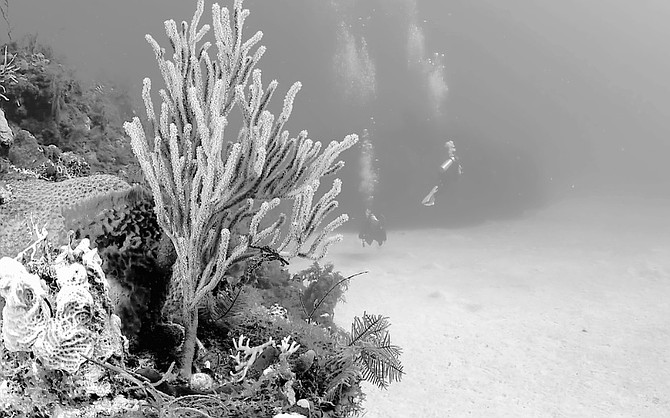
ELKHORN Coral in The Bahamas. Photo:MSC Foundation
The Bahamas has suffered a gradual decline in coral cover throughout the 21st century, a study has revealed, finding that increased global and ocean warming are giving reefs less time to recover.
The Global Coral Reef Monitoring Network (GCRMN) report, billed as the largest-ever global assessment of coral reef conditions, revealed a relative 9.5 percent decline in average global hard coral cover compared to the 1980-2009 average benchmark.
The report, ‘Status of Coral Reefs of the World: 2025’, said the greatest losses following mass bleaching events driven by marine heatwaves. It added that these bleaching events are becoming more frequent and intense as the Earth’s climate warms, leaving reefs with less time to recover.
However, despite the global decline, several regions showed that reefs can recover when local threats are managed effectively. The study found reducing pressures related to overfishing, coastal development, water pollution, run-off and coral predation can strengthen reef resilience and improve the prospects for recovery following bleaching.
“This report provides the most comprehensive assessment to-date of the status of the world’s coral reefs, and the message is clear: Governments must act with urgency to implement evidence-based policy and management. The strongest pathway to safeguard coral reefs is rapid emissions reductions, effective action on local pressures and sustained long-term monitoring so action is targeted where it matters most,” said Dr Manuel González Rivero, the report’s lead author.
The MSC (Mediterranean Shipping Company) Foundation, which contributed to the report, said its Bahamas-based Super Coral Reefs Programme combines coral restoration, marine science education and public engagement at its Marine Conservation Centre at Ocean Cay.
The Foundation provided funding alongside other donors to the latest GCRMN report, and supplied a case study showcasing the programme’s research partnerships, monitoring, coral restoration and coral disease treatment.
“We are proud to have contributed to this extraordinary global scientific effort,” said Daniela Picco, the MSC Foundation’s executive director. “Coral reefs are sending us a clear message: These vital ecosystems are under increasing pressure worldwide.
“Yet the report also shows that, where local stressors are managed effectively, reefs can recover. This is why we strongly believe in the importance of investing in research and monitoring, which helps inform restoration locally. The choices we make locally today can have a global impact on the future of these vital ecosystems.”
Although coral reefs cover only 0.2 percent of the ocean floor, they are home to more than 25 percent of all marine species. They support the livelihoods, food security and well-being of about one billion people, and provide ecosystem services estimated to be worth up to $9.9trn annually. Coral reefs also protect coastlines and contain bioactive compounds that contribute to medical and pharmaceutical research.
The GCRMN report showed the Caribbean has suffered a strong decline in coral cover, especially after strong marine heatwaves and disease outbreaks. The rapid spread and mortality from Stony Coral Tissue Loss Disease (SCTLD) has driven severe coral loss across the regions.
Other impacts include increasingly intense hurricanes that damage the coral, pressures from coastal development with increased pollution, unsustainable fishing, increasing sargassum and invasive species. The Bahamas was found to have generally lower coral cover, which remained through the 1990s, followed by a gradual decline through the 2000s and 2010s.
The 2025 GCRMN assessment drew on 40 years of global data, including 21.1m observations from 36,886 reef sites – more than ten times the number included in the 2020 report. The data were collated by more than 600 partners across many reef monitoring networks.




Comments
Use the comment form below to begin a discussion about this content.
Sign in to comment
OpenID