By KEILE CAMPBELL
Tribune Staff Reporter
kcampbell@tribunemedia.net
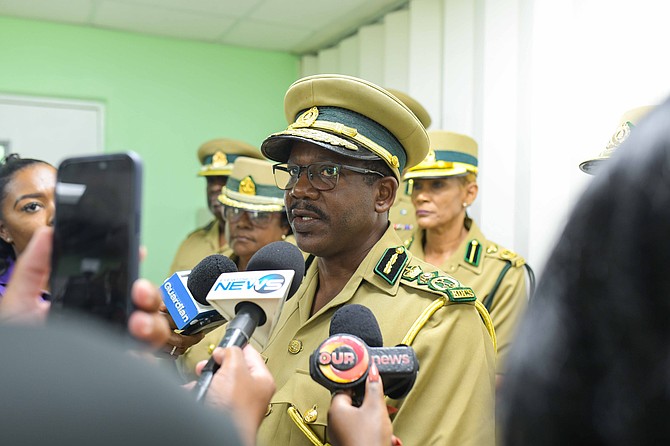
THE Bahamas Department of Corrections is considering watch-style electronic monitors for inmates released under the proposed parole system, with Commissioner Doan Cleare saying the devices would be less conspicuous than ankle bracelets and allow parolees to return to workplaces without being visibly identified.
Mr Cleare said the proposed parole legislation would require electronic monitoring and that officials were examining technology similar to devices being used in Jamaica.
“You don't want anybody to work in an environment and people seeing them walking around with the bracelet on their feet,” Mr Cleare said.
He also claimed the watches being considered could detect marijuana or other drugs through the wearer’s skin.
About 50 inmates currently work outside the prison without electronic tracking devices and must instead be physically monitored by correctional officers, he said.
Asked about concerns over tampering, Mr Cleare said interfering with a device would result in arrest. He said inmates fitted with the watches would be those considered suitable for reintegration into society.
“In other words, these are the best of the best that we are trying to release into society for reintegration,” he said, adding that “the board is comfortable with them”.
The electronic monitoring would form part of a conditional-release system under which inmates would have to complete rehabilitation, educational or vocational programmes before being considered for parole.
Mr Cleare said inmates approaching the final two to three years of their sentences would first be assessed by an internal parole unit based on their classification, sentence plan, training and programme completion.
“It is us, the department, who have to do the assessment on the inmate,” he said, adding that the completed file “will go before the parole board, and that will determine whether if a person will go on parole or not”.
He stressed that parole would not be automatic.
The parole board could impose conditions including curfews and drug testing, and Mr Cleare said a breach could result in the parolee being returned to prison to serve the outstanding portion of the sentence.
“If you don't follow through on even one of those conditions,” he said, the person could be returned to custody.
Mr Cleare said the proposed system would differ from the current arrangement because an inmate’s original sentence would remain in effect throughout the parole period.
He gave the example of an inmate sentenced to ten years who could be considered for parole with two or three years remaining and serve that period under supervision in the community.
He contrasted that with the existing arrangement, saying a person sentenced to ten years can currently leave prison after serving about six years.
Under parole, he said, the full sentence would remain in force even if the inmate were conditionally released before it expired.
“Ten years is ten years,” Mr Cleare said.
The proposed system would also have separate internal and external parole functions.
Correctional officers would assess inmates and prepare their files before release, while parole officers would monitor them after they return to the community.
“So we have internal parole, and we have external paroles,” Mr Cleare said.
The Department of Corrections would also be required to help inmates secure employment before they are released.
“The prison will have to find a job for you,” Mr Cleare said.
He said the department would no longer simply release an inmate at the prison gate and that, once employment was secured, the parolee would be expected to remain on the job for the duration of the parole period.
Mr Cleare said the department has already begun training officers for the proposed system, with 20 officers having received training in Canada and additional officers undergoing or scheduled for overseas training.
The department intends to have more than 50 people trained in assessments and reporting as it prepares for both the internal evaluation of inmates and their supervision after release.
Officials are also continuing public education on the proposed legislation, with four town hall meetings planned for New Providence.
Mr Cleare said the first meeting will be held tonight at CR Walker and described the sessions as a refresher after similar outreach was conducted around the country about a year and a half ago.
However, he gave no timetable for when the parole legislation is expected to go before Parliament.
“That's the question you have to put to the minister,” Mr Cleare said.




Comments
Sickened 1 hour, 16 minutes ago
“You don't want anybody to work in an environment and people seeing them walking around with the bracelet on their feet,” Mr Cleare said.
I disagree completely. I would prefer the parolees to have to wear a fluorescent shirt with CRIMINAL written across the front and back. And maybe a bar code that you can scan to see what crime they committed.
tell_it_like_it_is 27 minutes ago
Please get rid of this idea. This sounds like another way for the government to waste more money for the criminals to just remove the device, just as many have outsmarted the ankle monitor.
Not every solution should mean spending a bunch of money! Sigh
Sign in to comment
OpenID