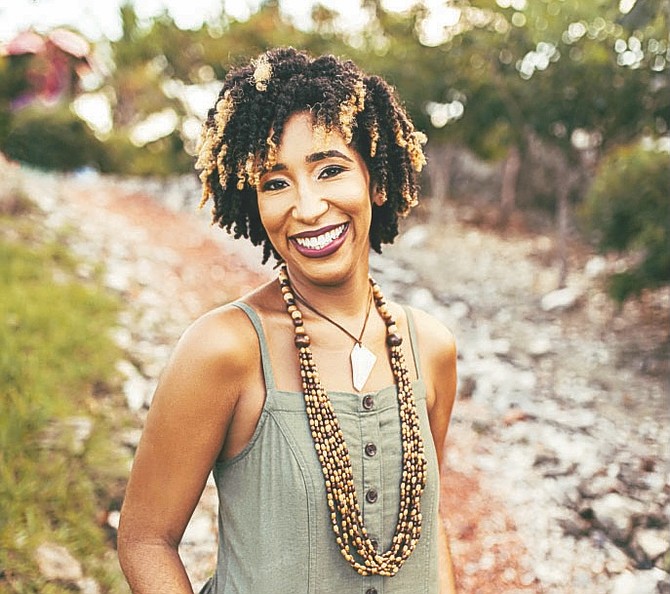
Alicia Wallace
By JADE RUSSELL
Tribune Staff Reporter
jrussell@tribunemedia.net
EQUALITY Bahamas says the Davis administration has not treated gender-based violence as a priority this term, pointing to limited support systems for victims and its refusal to criminalise marital rape.
The group said the administration had not prioritised issues affecting women, who remain among the most vulnerable, pointing to limited resources for victims of sexual and domestic abuse. Recent cases have highlighted complaints from rape victims about a lack of shelters, police support and housing.
Alicia Wallace, director of Equality Bahamas, said the government has shown little willingness to take even the most “obvious and uncomplicated action” to address gender-based violence, despite repeated recommendations from advocacy groups and international bodies.
She said the administration does not need to develop new policies, noting that recommendations from organisations such as the Committee on the Elimination of Discrimination against Women and the Human Rights Council are already established, with draft legislation requiring only updates and implementation.
“Since 2018, we have been highlighting the recommendation made by the CEDAW Committee to criminalize marital rape, and even with a new draft bill to amend the Sexual Offences Act, this administration has intentionally steered away from it,” she said.
In February 2025, Prime Minister Philip “Brave” Davis said he wanted “consensus” on criminalising marital rape, arguing the government needed to understand what a cross-section of Bahamians wanted on the issue, “not just one group”.
That same month, Attorney General Ryan Pinder indicated the administration did not expect to introduce such legislation before the end of its term, citing the political sensitivity of the issue.
Ann Marie Davis, the spouse of the prime minister, has said she supports criminalising marital rape and believes the government should move forward with legislation to do just that.
In 2022, she said: “We must agitate and hold our policy makers accountable. We want them to upgrade our laws and we really need that. Imagine, we are still living in a society where no does not mean no. How could that be? I tell you no and you think I mean yes. No, sir. Of course I’m talking about marital rape right. No means no.”
Critics note that governments have acted on divisive matters without broad consensus, including the Christie administration’s regularisation of the gaming industry after a failed referendum and the Davis administration’s cannabis reforms despite objections from some religious groups.
Ms Wallace said marital rape is often minimised but argued the legal exception reflects deeper inequality.
“It suggests that women's identities and autonomy cease to exist in the context of marriage and, dangerously, that we become the property of men. This is at the root of all other issues of gender inequality and gender-based violence.”
She also criticised the Opposition, saying it has failed to hold the government accountable to its international commitments.
“As story after story of domestic violence and sexual violence reach headlines, they have not reiterated recommendations, support our demands, or made their own interventions, completely wasting the leverage they had as an opposition,” she said.
Prodesta Moore of the Bahamas Urban Youth Development Centre said domestic violence and sexual assault continue to affect families across communities, with young people often directly or indirectly impacted. She said marital rape remains uncriminalised and support services, including shelters, are limited.
“These are not just adult issues, they are youth issues,” she said. “They shape the environments our young people grow up in, the trauma they carry, and the futures they are trying to build.”
She called for stronger protections for women and girls, expanded education and prevention programmes, and more accessible support services.
Khandi Gibson of FOAM said many women continue to suffer abuse but argued the government should not bear sole responsibility, noting that some women remain in abusive relationships for complex reasons. She added that resources remain limited, particularly for temporary housing and counselling.
The Tribune yesterday contacted Minister of Labour and the Public Service Pia Glover-Rolle, Minister of Energy & Transport Jobeth Coleby-Davis, Minister of Education Glenys Hanna-Martin, and State Minister for Housing and Urban Renewal Lisa Rahming for comment on unresolved women’s issues in the administration, but they did not respond before press time.




Comments
DWW 2 hours, 13 minutes ago
But the wife got a nice taxpayer office though
Sign in to comment
OpenID