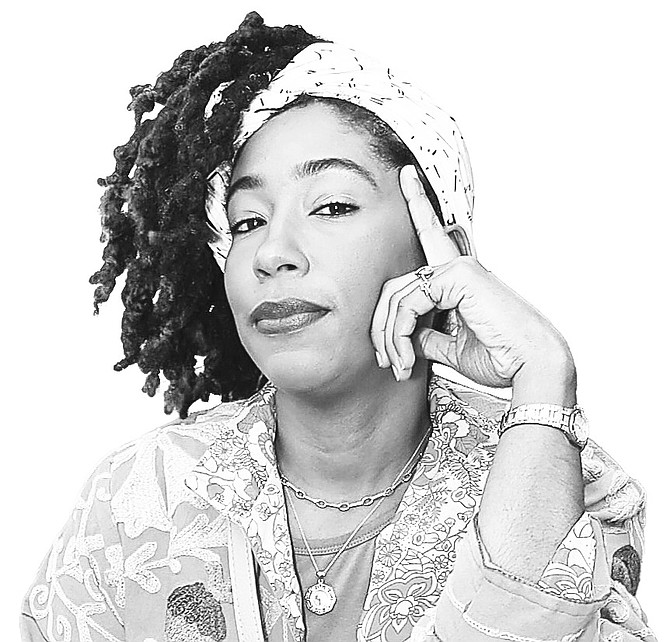
Alicia Wallace
IN March 2026, the United Nations General Assembly determined, in a vote, that the trafficking of enslaved Africans, chattel slavery of Africans, was the gravest crime against humanity. In the assembly of 193 countries, 123 voted yes, 3 voted no, 52 abstained, and 15 were non-voting. Predictably, Argentina, Israel, and the United States voted against the resolution.
Key points from Resolution 80/250
The resolution says, “Reaffirming that under international law, including the principles of the articles on responsibility of States for internationally wrongful acts, States bear responsibility for internationally wrongful acts and have an obligation to cease the act if it is continuing and to offer appropriate assurances and guarantees of non‑repetition if the circumstances so require, and to make full reparation for the injury caused, which may take the form of restitution, compensation and satisfaction, either singly or in combination.”
It acknowledges that the trafficking of enslaved Africans and racialized chattel enslavement was “world-breaking and world-redefining” and “ushered in the racial capitalist system, transforming the fates of all peoples across the world through new racialized regimes of labour and property.”
Importantly, the resolution notes the exceptional gendered nature of the trafficking of enslaved Africans and racialized chattel enslavement. It specifically names sexual violence, forced reproduction, domestic servitude, and gender-specific forms of exploitation.
The resolution clearly acknowledges the lasting impact of slavery and colonization, and continued racial discrimination and neocolonialism, and the resulting suffering inflicted upon people of African descent. It “affirms the importance of addressing historical wrongs affecting Africans and people of African descent in a manner that promotes justice, human rights, dignity and healing, and emphasizes that claims for reparations represent a concrete step towards remedying historical wrongs against Africans and people of African descent.”
It calls for a full apology, restitution, compensation, and international cooperation on reparations. The adoption of Resolution 80/250 is acknowledgment of the historic and ongoing harm of the trafficking and enslavement of African people, and it extends an invitation to United Nations Member States and relevant entities to “[develop] frameworks for dialogue, cooperation and action on reparatory justice and reconciliation.”
The Bahamas, along with all CARICOM Member States, voted yes on the resolution. This would suggest that the government has an understanding of the gravest crime against humanity, that it was enacted against our ancestors, that it continues to affect us today, and that reparations are owed and must be paid by the offenders. Further, The Bahamas National Reparations Committee sits within the Ministry of Foreign Affairs, underlining the supposed position of the government on reparations. How, then, does the same government administration that voted yes on Resolution 80/250 and set the mandate for The Bahamas National Reparations Committee welcome and fully fund—with our money—a royal visit?
CARICOM Ten-Point Plan for reparations
This year, The CARICOM Ten-Point Plan for Reparatory Justice: A Manifesto for the Coming Englightenment was published. It’s the second update to the earlier CARICOM Ten-Point Plan for Reparations. It’s “a framework for promoting and demanding reparations and sets out the call for reparatory justice within the context of development priorities.” This version has a more intentional focus on gender dimensions, engagement with the African diaspora, and climate justice. It’s expected to evolve as more evidence and knowledge is built on the crime against humanity it has been developed to address.
The CARICOM Reparations Commission was established at the Thirty-Fourth Regular Meeting of CARICOM held in Trinidad and Tobago in July 2013. The Bahamas was one of the 13 countries (and UWI) to appoint a chairperson for its National Reparations Committee at that meeting. It was a deliberate decision to join the regional movement for reparatory justice. The Bahamas National Reparations Committee works to inform the public about the call for reparations and invite engagement on the topic while strengthening the movement through numbers and commitment.
Why is the Prime Minister silent on reparations this week?
Since 2021, the Prime Minister Philip Davis has been echoing Prime Minister of Barbados Mia Mottley regarding climate justice, his sudden interest in climate issues conveniently timed with calls for climate finance and the shift in conversation from aid to reparations. In July 2025, he addressed Parliament on the International Court of Justice advisory opinion on the obligation of States regarding climate change. Davis said, “This ruling changes the conversation. No longer can support for climate adaptation be seen as aid. It is responsibility. No longer can compensation for loss and damage be described as a moral gesture. It is a legal consequence. And no longer can the right of nations like ours to exist be treated as negotiable. It is fundamental.”
This was a clear indication that the Prime Minister understands the concept of reparations, and is willing to call for reparations in certain places and situations. Just last month, at the 81st session of the United Nations General Assembly, Davis said, “The wealth of empires was built on the stolen lives of our ancestors, including enslaved children. It is important that the former colonisers have recognised this atrocity, as recognition was a vital step. But recognition without repair is only a sentence on a page. We call on the nations that profited to engage seriously with reparatory justice: truth, apology, restoration, and development.”
Why has he not uttered a word about reparations in the days leading up to the royal visit? What’s the point of raising the issue among peers, playing at solidarity, and actively choosing to ignore the people raising it at a most opportune time, in country, in the context of the visit of the offender who must pay? Which version of the Prime Minister is the real one? Is it the one who is chasing the global spotlight that follows Motley or the one who hides from the national discussion?
The answer, of course, is obvious.
Protests discouraged
Last week, in reference to protests, Commissioner of Police Shanta Knowles said “anything that distracts negatively from this visit” will be handled by 300 police officers. She added that she believes Bahamians will “show the world how we mark the manner of our bearing.” She said she believes it will be “free of controversy of any kind,” and encouraged people to “show that we know how to behave.”
Why was the national anthem quoted at the people, as if it’s a weapon? Why are the people being told to “behave” at a time fit for, not just any protest, but one that is aligned with a mandate taken up by the government and with the speeches made by the Prime Minister in multilateral spaces?
Insult added to injury
We still don’t know the cost of the visit to which we did not consent. The Minister of Foreign Affairs said that the amount is “appropriate” though it is unknown. How is it possible to know that it is appropriate when there is no available number? Why was the decision made to host the colonizer without a known cost?
Children are, once again, being used to entertain the colonizer. Why should children, the descendants of people who were trafficked and enslaved, be put out on a park, whatever the weather, for the amusement of a person who refused to give a full and formal apology for the gravest crime against humanity? Who decided that it’s appropriate for children to miss hours of school for this? How can we talk about reparations while entertaining the main beneficiary of slavery and colonization?
Grave disrespect
Perhaps the most disgusting, insulting, ignorant element in this royal visit is the use of Junkanoo for the colonizer’s entertainment. Junkanoo, historically, is a form of protest. It is resistance. It is spirit. Junkanoo is made by the people—hours and hours of cutting, pasting, and tricking, hours and hours of arranging music and choreographing, all before it comes together for hours and hours of practice.
There is no reason for us to share our dance, our music, our creativity, or our energy with the colonizer. In fact, it’s egregious to do so. It’s disrespect. It’s counter to the rebellious nature of Junkanoo and the protest that we ought to mount together against the misuse of our tax dollars, the presence of the colonizer, the failure of the government to discuss reparations, the commodification of the people, especially children, and the effort to discourage appropriate responses from the people opposed to this disgrace.
The hope we can hold today is that the people in the parade truly make it a show by turning it into a protest aligned with the call for reparatory justice. We need not be a people who play music or dance for the benefit of the gravest crime against humanity, which continues to harm us today. He is already too comfortable here. It’s our duty to disturb that inner peace.




Comments
Use the comment form below to begin a discussion about this content.
Sign in to comment
OpenID